

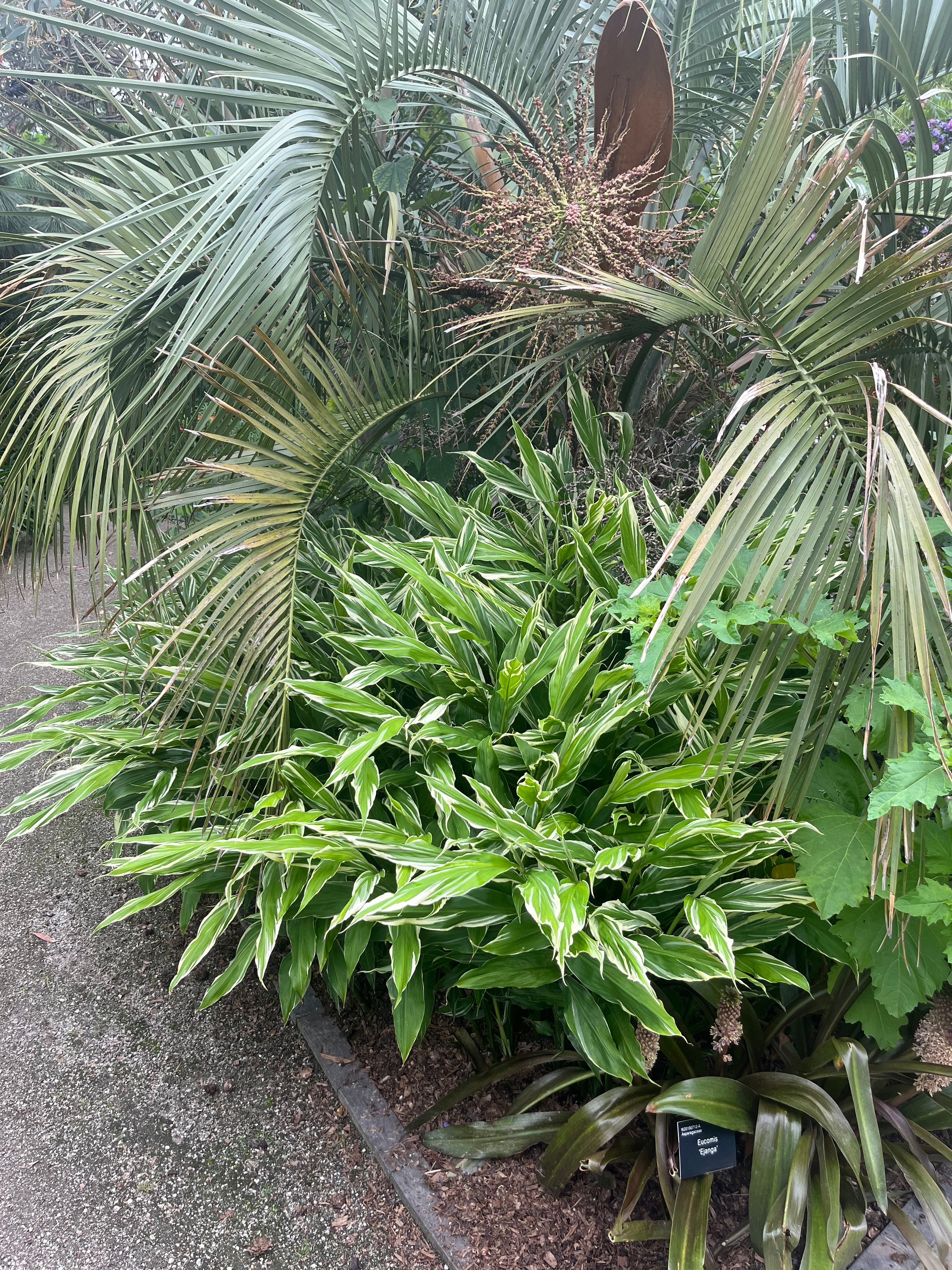
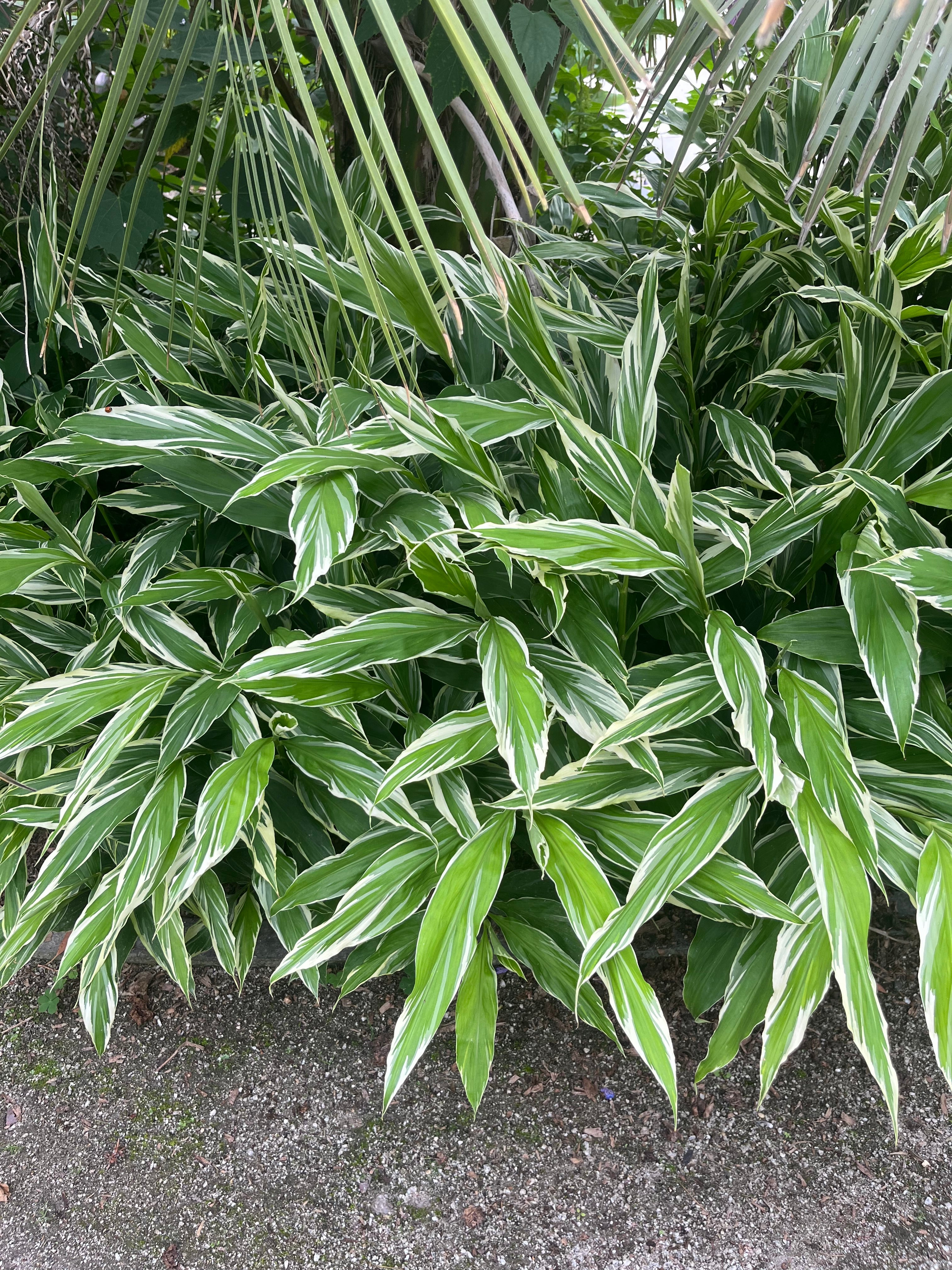
Zingiber mioga 'White Feather'
Japanese Hardy Ginger 'White Feather' Zingiberaceae
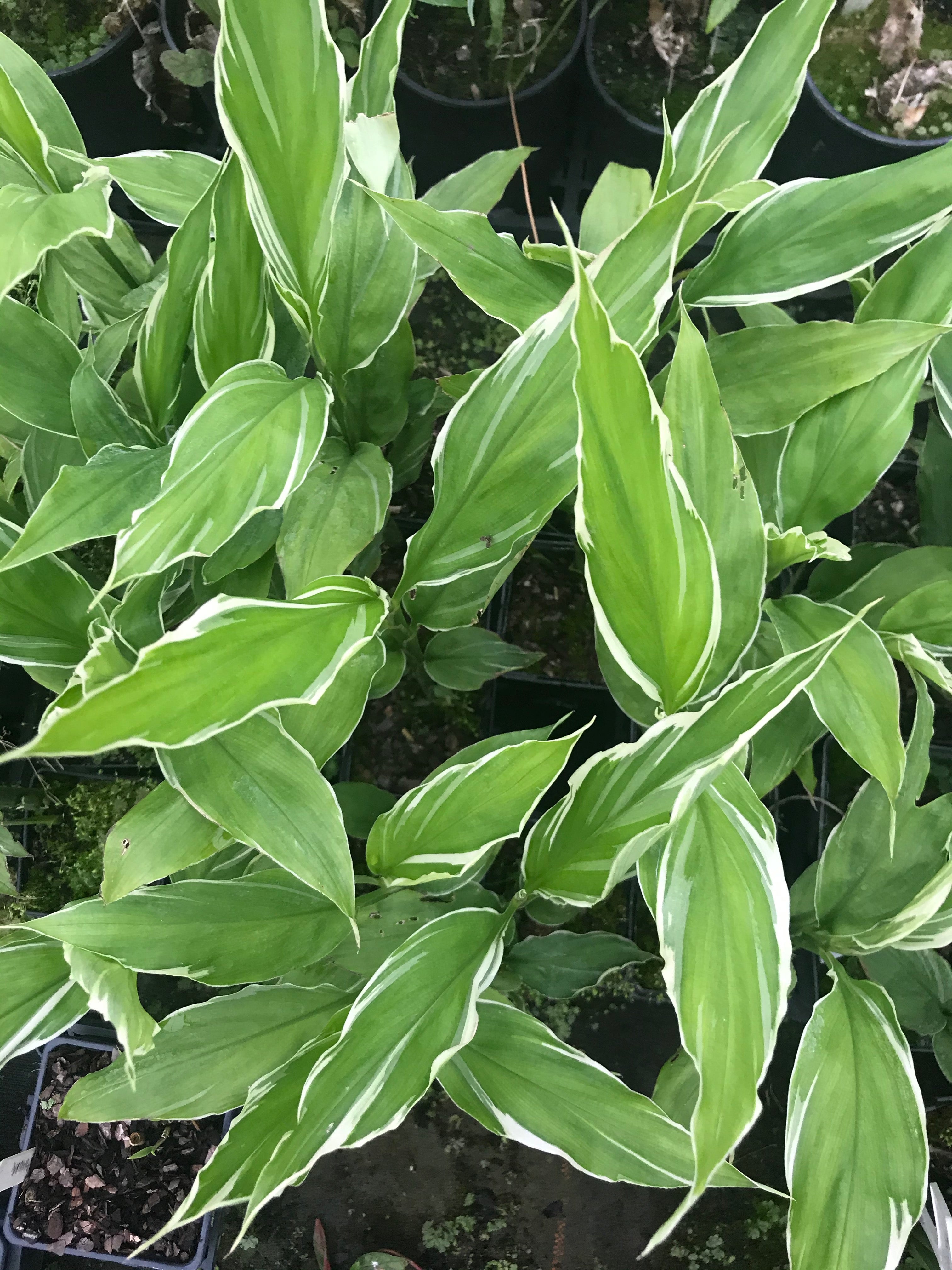
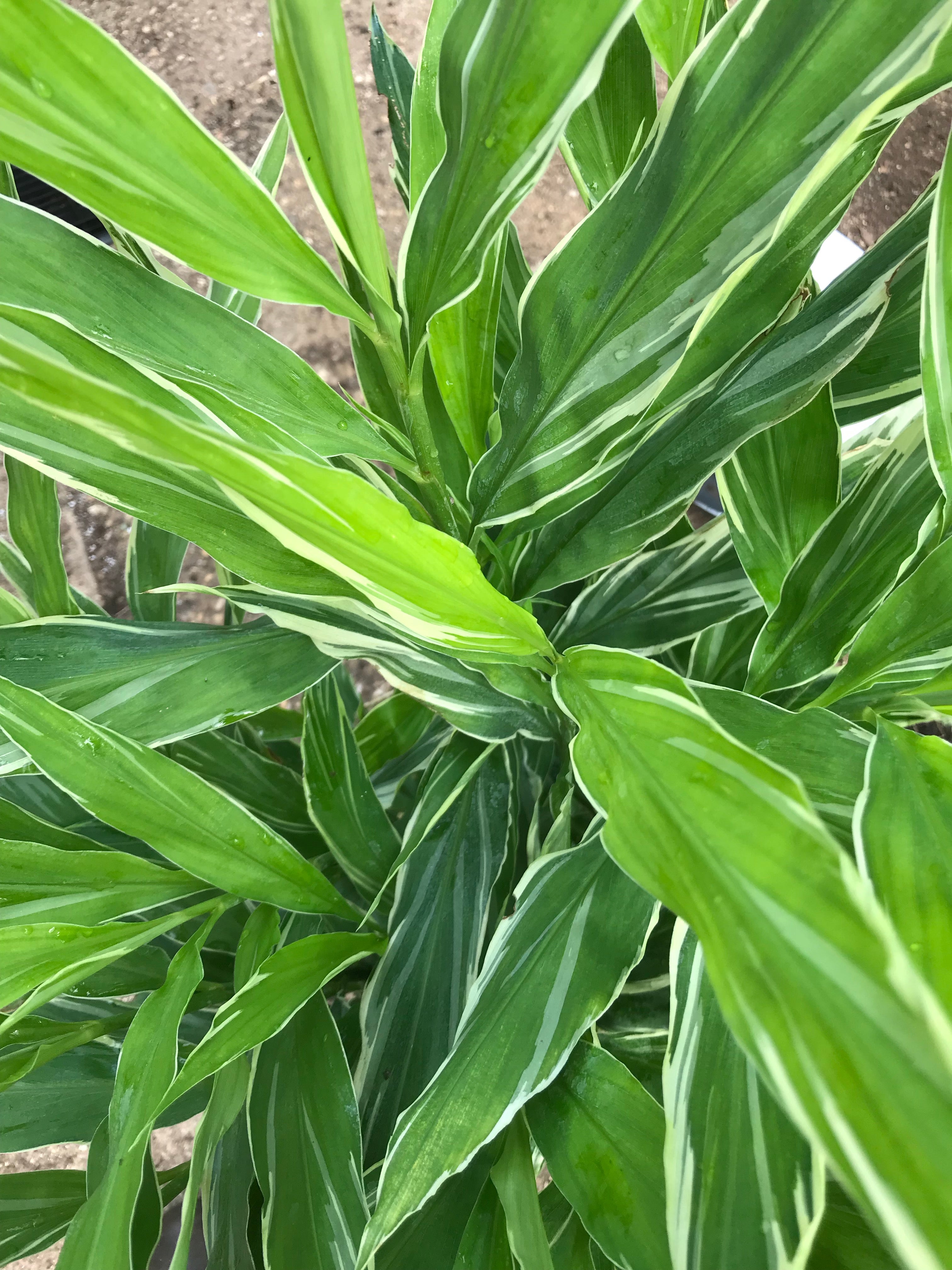
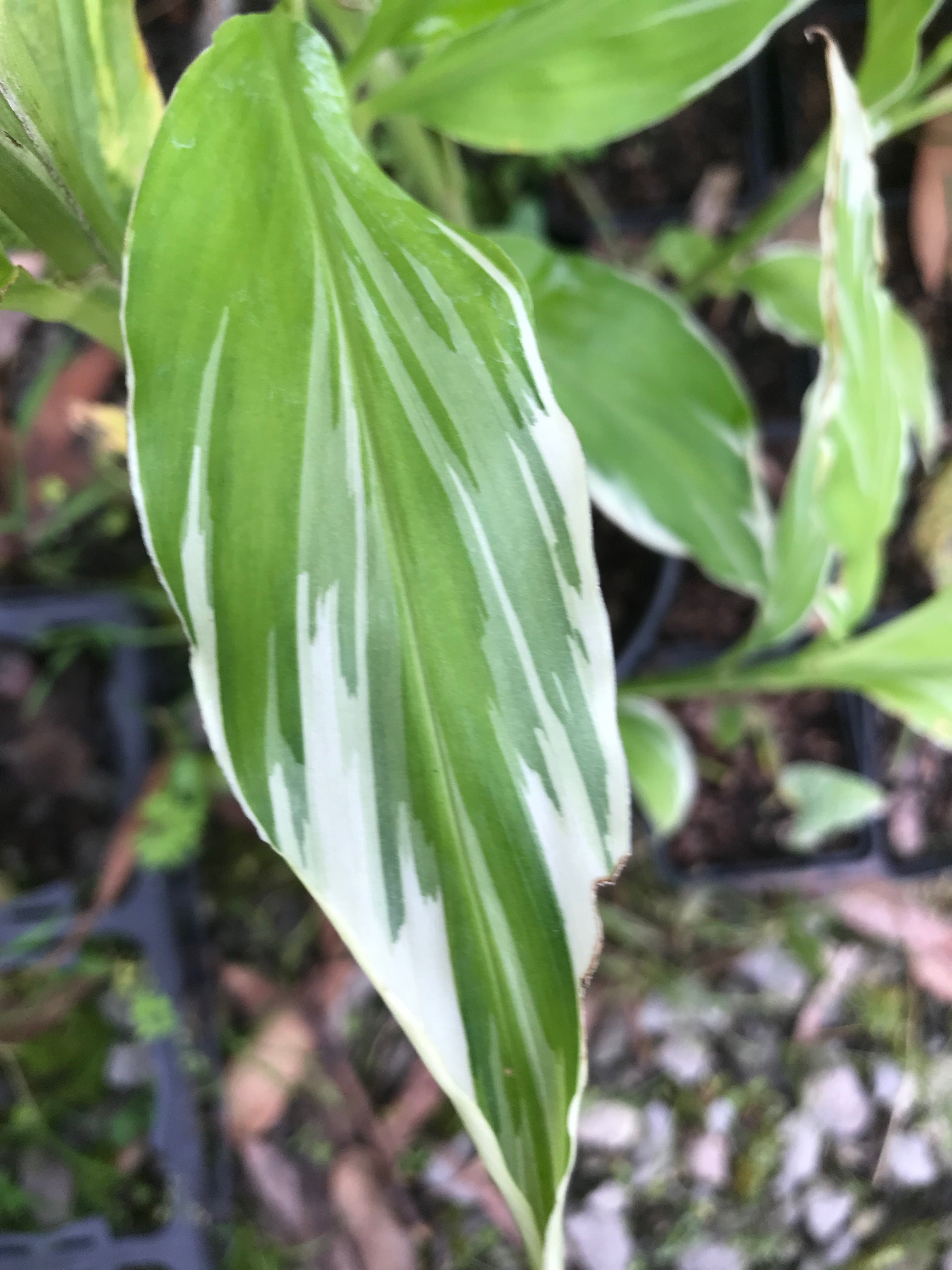
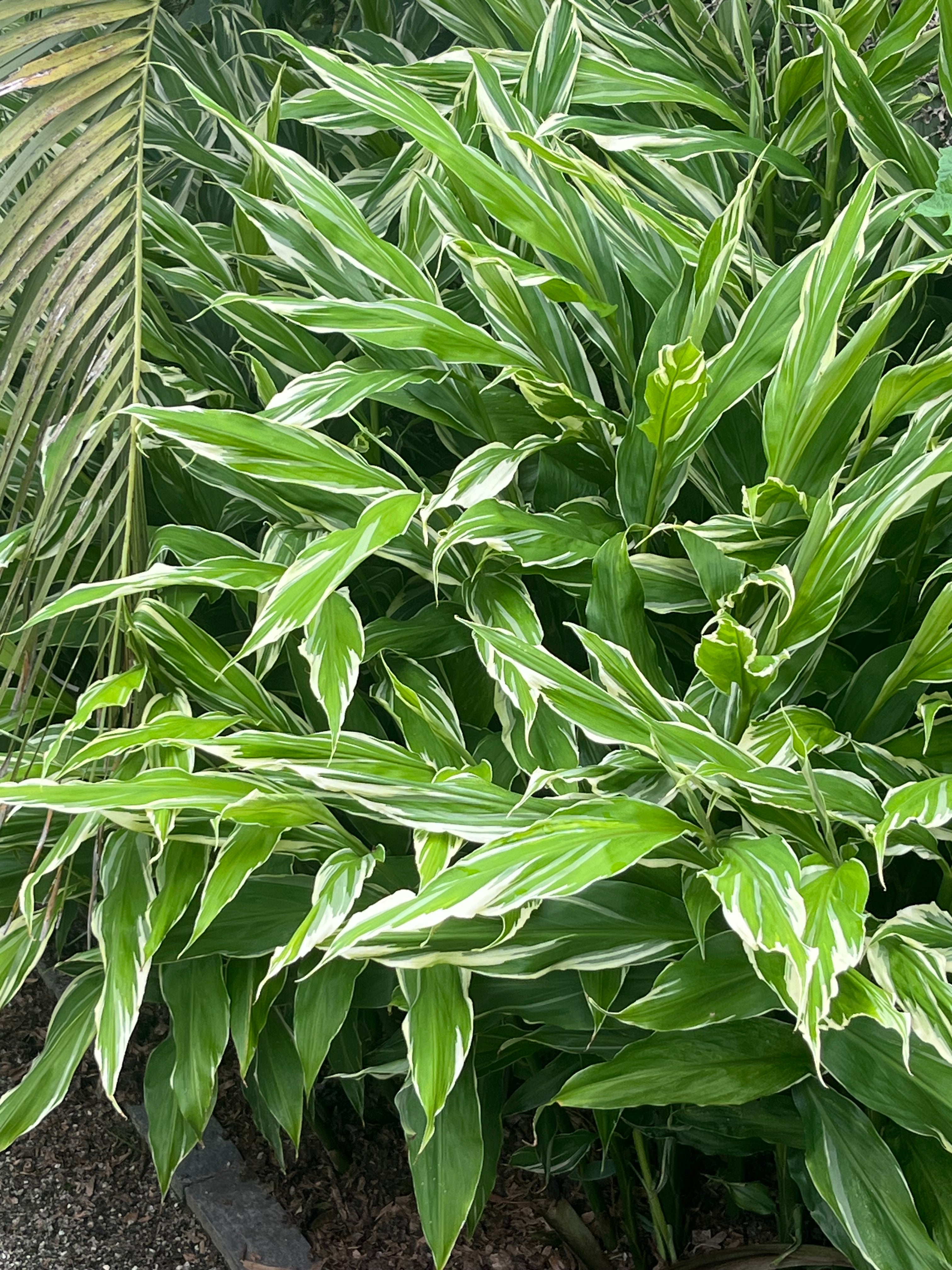
A Japanese ginger wearing its Sunday best. Zingiber mioga ‘White Feather’ forms handsome, upright clumps of dark green to bluish-green foliage, each lance-shaped leaf edged and finely marked with creamy white to yellow-white. The variegation is comparatively restrained, with a few narrow stripes rather than the more heavily marked leaves of ‘Dancing Crane’, giving it an elegant rather than gaudy appearance. In late summer and autumn, curious flowerheads emerge directly from the rhizomes at ground level, producing creamy-white flowers from pinkish buds. The effect is wonderfully exotic, although this is a surprisingly hardy ginger for the British garden. And, usefully, the unopened flower buds are edible.
Introduction: ‘White Feather’ is one of three recognised variegated cultivars of Zingiber mioga, alongside ‘Dancing Crane’ and ‘Silver Arrow’. Theodor C. H. Cole and Sven Nürnberger described the cultivar in their 2014 The Plantsman account of the species and its cultivars, noting its few, narrow white to yellow stripes, particularly towards the leaf margins. Its original selector, date of introduction and precise provenance do not appear to have been published, so no collection locality or individual should be credited without further evidence.
Edible: As with the species, the unopened flower buds are edible and are harvested as myoga, particularly in Japanese cuisine. They are crisp, aromatic and pleasantly pungent, and can be sliced fresh, pickled or used as a garnish. Young shoots are also edible. The rhizomes, despite being ginger relatives, are not the part normally cultivated for culinary use.
Ethnobotany: Zingiber mioga has a long history as a food and flavouring plant in Japan and East Asia. The flower buds are traditionally finely sliced into soups, noodles and other dishes, valued for their fresh, aromatic flavour. The species is also recorded as having medicinal uses in traditional East Asian practice.
Growing conditions: Best grown in a fertile, humus-rich, moisture-retentive soil in light to partial shade. The variegated foliage appreciates protection from strong midday sun, while good summer moisture encourages the best growth. ‘White Feather’ is less vigorous than the green-leaved species, and the variegation makes it somewhat less hardy than unvariegated forms.
Garden use: An excellent choice for the woodland garden or an exotic-looking herbaceous border, particularly alongside ferns, Begonia, Deinanthe and other shade-loving perennials. Its restrained variegation gives useful illumination without the visual assault of some variegated plants — and the strange, ground-level flowerheads provide a delightful late-season surprise.
Flowering: August–October
Hardiness: H4–H5, approximately -15 to -10°C; best given some winter protection when young
Height: 50–80cm
Spread: 50–80cm
- Standard delivery: £9.99
- Free shipping on orders over £100
- Minimum order is £20
Read more: Shipping & Delivery