

Symphytum x uplandicum ‘Moorland Heather’
Comfrey Boraginaceae
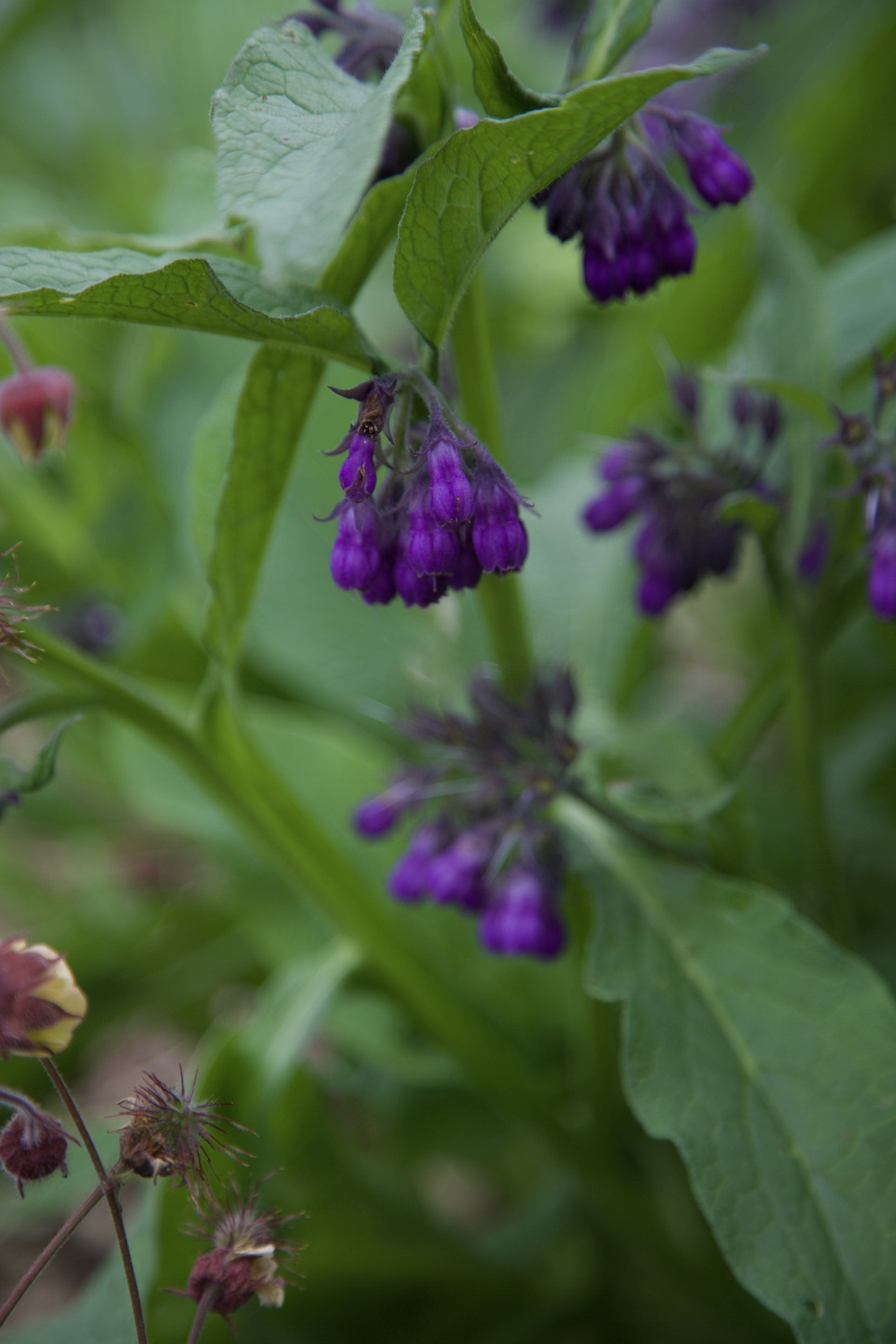
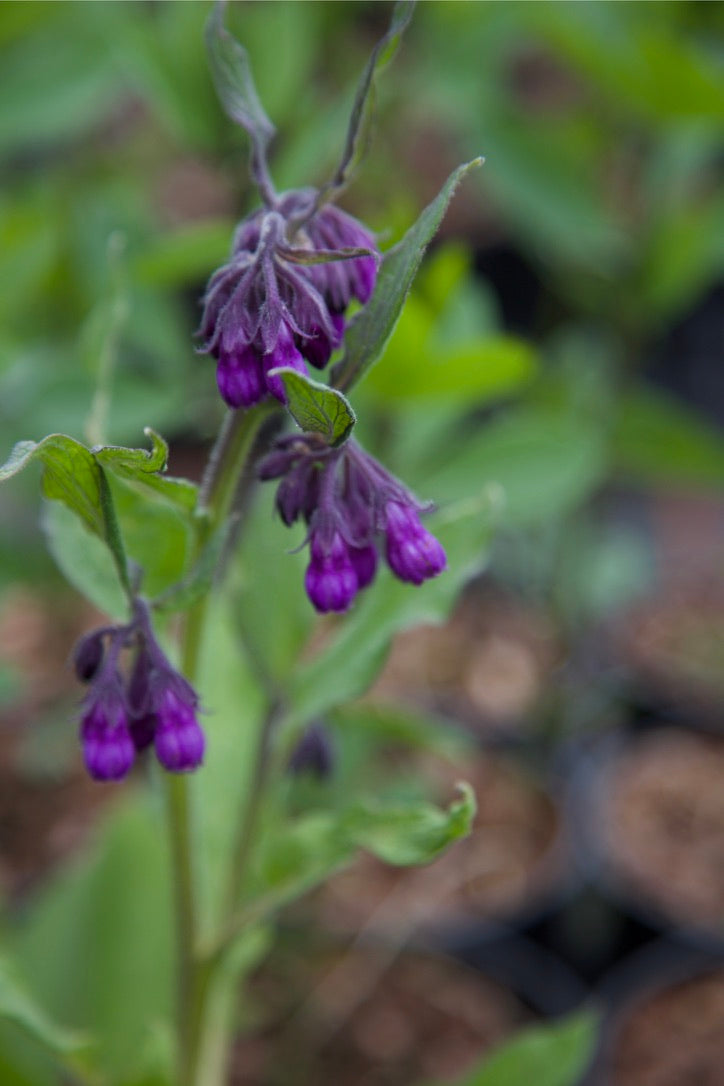
Symphytum × uplandicum ‘Moorland Heather’ is a particularly handsome form of Russian comfrey, and one of the better ornamental selections of a genus not normally associated with restraint. It forms a substantial clump of rough, bristly, mid-green leaves, above which rise branching stems carrying striking dusky violet to deep purple, tubular flowers. The dark flowers are especially effective against the rather coarse-textured foliage and are much admired by bees. Sarah Price described it as more refined and less vigorous than common comfrey, while still being thoroughly bee-friendly.
Its story is particularly charming. ‘Moorland Heather’ was a chance seedling found at Moorland Cottage Plants in South Wales, subsequently brought to wider attention through its exhibition at Chelsea and Hampton Court. Beth Chatto Gardens records its origin as a chance seedling at Moorland Cottage Plants and notes the characteristic dark-violet flowers and its ability to flower again if cut back in midsummer.
Compared with the formidable ordinary S. × uplandicum, ‘Moorland Heather’ is more refined and somewhat less rampant, although it remains a good-sized plant when established. The flowers appear from late spring into summer, and cutting the plant hard after flowering can encourage a second flush later in the season. This makes it considerably more useful in a mixed herbaceous planting than its reputation as a comfrey might suggest.
The hybrid S. × uplandicum is derived from S. officinale × S. asperum, and ‘Moorland Heather’ belongs to this hybrid complex rather than being a selection of our native common comfrey. It should therefore not be confused with S. officinale, despite their superficial similarity.
In the garden, give it moist, reasonably fertile soil in sun or partial shade. It is particularly good towards the back of a naturalistic or informal border, where the tall stems can mingle with grasses and other perennials. It also makes an excellent wildlife plant, with the tubular flowers particularly attractive to bees.
Cultivation: Moist but well-drained soil in full sun or partial shade. Cut back after flowering to rejuvenate the foliage and encourage a second flowering. Propagate by division in spring or root cuttings in early winter. Like other comfreys, it can become vigorous, so plant it where its spread can be managed.
Height: 1.2-1.6m
Spread: 90-120 cm
Flowering period: April–June, often again later if cut back
Position: Full sun or partial shade
Soil: Moist, fertile and moisture-retentive but well drained
Hardiness: H7
Family: Boraginaceae
Common name: Russian comfrey ‘Moorland Heather’
Origin: Chance seedling found at Moorland Cottage Plants, South Wales.
- Standard delivery: £9.99
- Free shipping on orders over £100
- Minimum order is £20
Read more: Shipping & Delivery