


Stachys affinis
Chinese Artichokes Lamiaceae
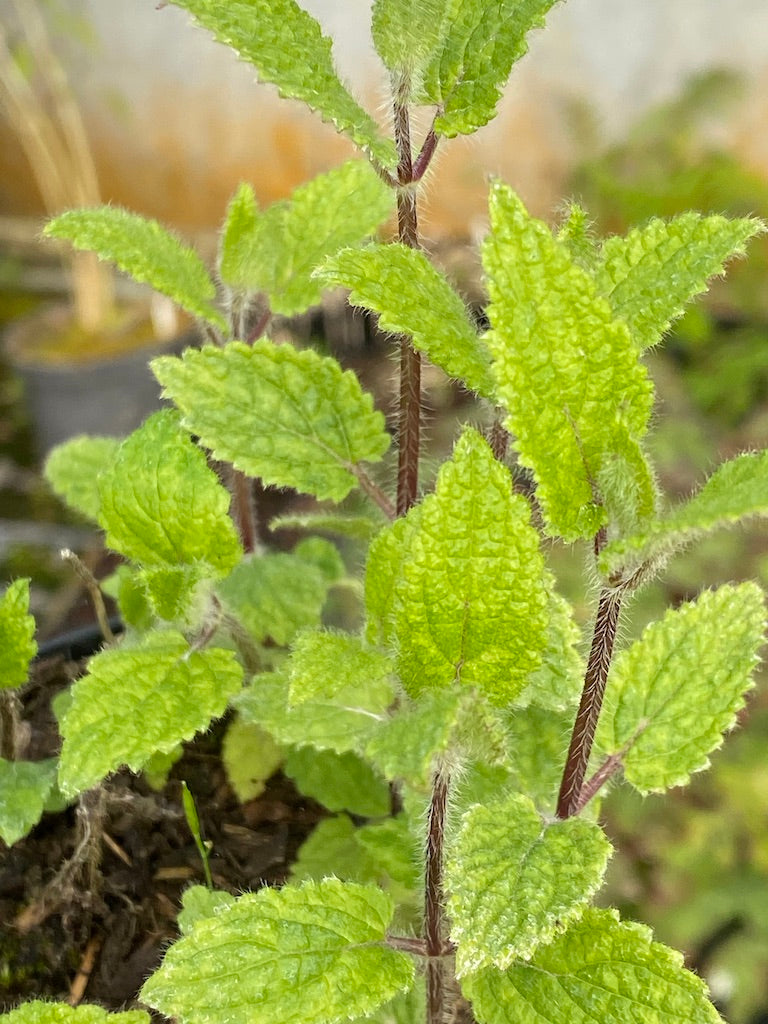
A wonderfully curious member of the dead-nettle family, Stachys affinis, commonly known as Chinese Artichoke, Crosne or Chorogi, is a low-growing, tuberous perennial from China and northern Myanmar. It forms spreading stems of crinkled, finely hairy foliage, with upright spikes of small pinkish-purple flowers in summer. The real attraction, however, lies underground: slender, pearly-white chains of knobbly tubers develop along the rhizomes, looking rather like miniature strings of scallop shells. They are one of the more unusual vegetables one can grow, and arguably the only member of the mint family to have achieved genuine vegetable-crop status in Europe. Kew accepts Stachys affinis Bunge, first published in 1833; Stachys sieboldii Miq. and Stachys tuberifera Naudin are important synonyms.
The tubers have been cultivated in China for centuries and became an established vegetable in Japan, where they are known as chorogi. Their European history is rather more recent: the crop was introduced to France in the nineteenth century and became particularly associated with Crosne in the Essonne, where commercial cultivation was established in 1882, giving rise to the French name crosnes. It enjoyed a period of considerable popularity before declining in Europe during the twentieth century, but has subsequently experienced something of a culinary revival.
The crisp tubers have a delicate, slightly sweet, nutty flavour with an artichoke-like quality and can be eaten raw, boiled, steamed, roasted, fried or pickled. In Japan they are traditionally pickled, including the distinctive red chorogi served as part of New Year osechi cuisine, with red shiso used to colour them. In China they are also traditionally eaten pickled or fermented. The tubers are rich in the oligosaccharide stachyose, which gives the plant its scientific notoriety as well as its name, and which is fermented by gut bacteria rather than digested directly by humans.
In cultivation Stachys affinis is remarkably easy, provided it is given a sunny position and fertile, moisture-retentive but well-drained soil. Plant the tubers in spring and harvest them from autumn into winter, lifting them as required because they do not store particularly well once removed from the soil. The plants spread readily through their underground rhizomes, so a confined bed or large container can be useful if you wish to keep its ambitions under control. The flowers are attractive enough, but frankly the underground treasure is the reason for growing it.
Height: 40–60 cm
Spread: 30–60 cm
Flowering: June–August
Hardiness: H6, approximately –20 to –15°C
Growing conditions: Fertile, moisture-retentive but well-drained soil; full sun. Avoid excessively heavy soils, where harvesting the small tubers becomes unnecessarily archaeological.
Range: China to northern Myanmar.
Habit: Tuberous, rhizomatous herbaceous perennial, spreading by underground stolons and producing chains of edible tubers.
Flowers: Small pinkish-purple flowers in upright terminal spikes.
Edible use: The crisp white tubers can be eaten raw, cooked, roasted or pickled; they have a delicate, nutty, artichoke-like flavour.
Culinary history: Cultivated in China and Japan for centuries; introduced to European horticulture in the nineteenth century and commercially grown at Crosne, France, from 1882.
Nomenclature: Stachys affinis Bunge, Enum. Pl. Chin. Bor. 51 (1833). Synonyms include Stachys sieboldii Miq. and Stachys tuberifera Naudin.
Common names: Chinese Artichoke, Japanese Artichoke, Crosne, Chorogi, Knotroot, Artichoke Betony.
- Standard delivery: £9.99
- Free shipping on orders over £100
- Minimum order is £20
Read more: Shipping & Delivery