

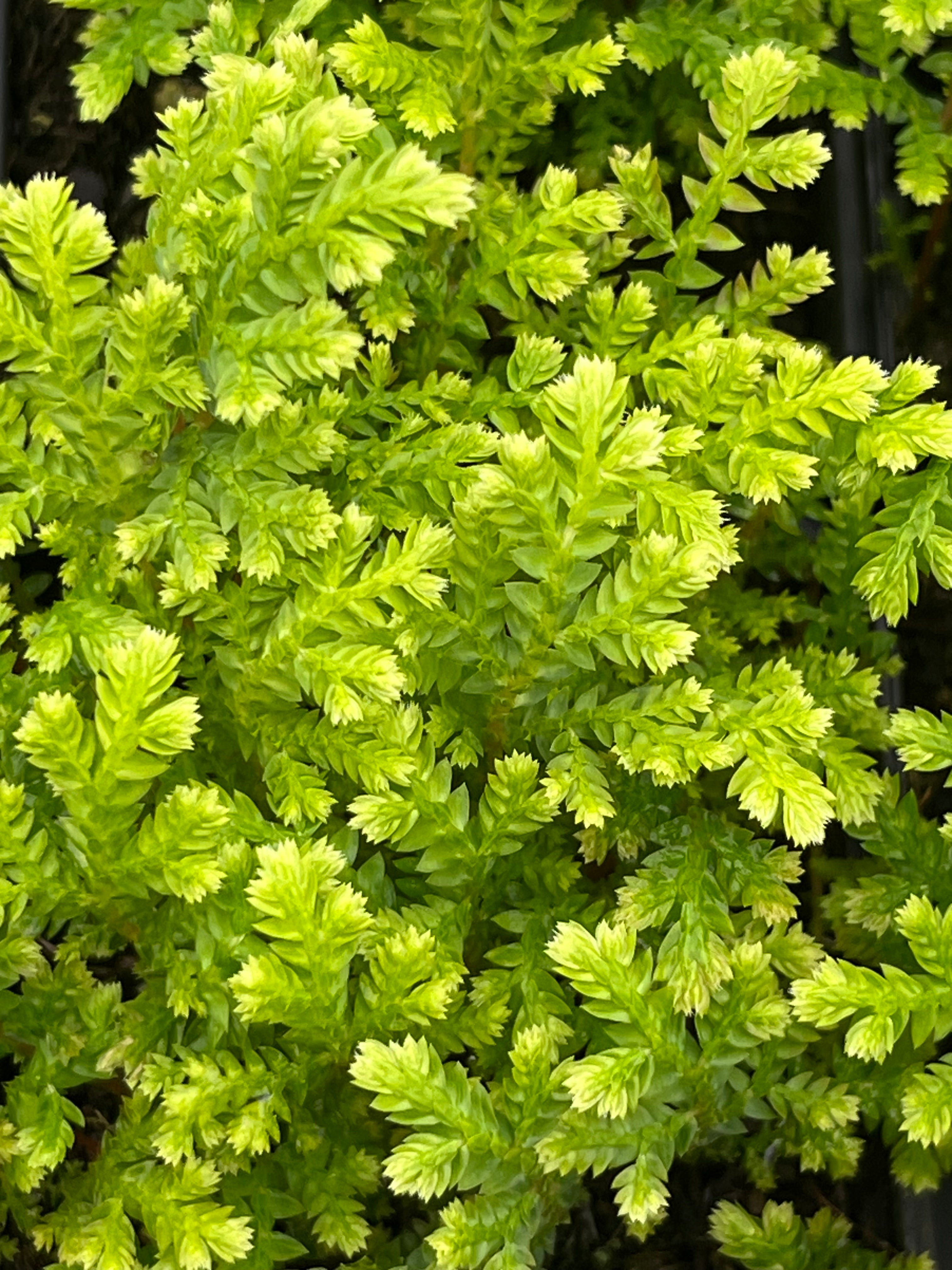
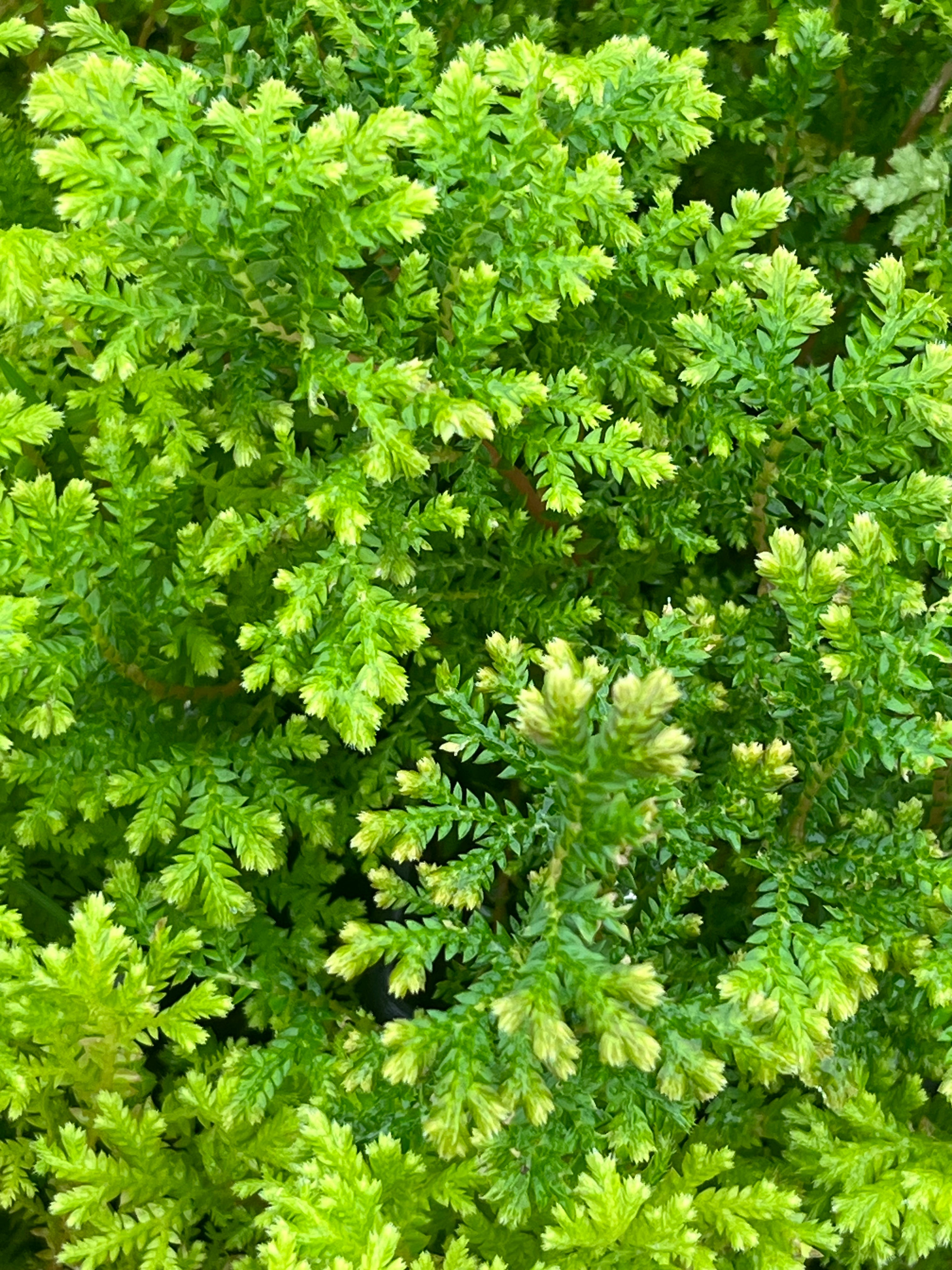
Selaginella chrysocaulos
Selaginella Selaginellaceae
A fascinating tuberous clubmoss from the mountains of southern and eastern Asia, forming erect, finely divided stems from a swollen underground tuber. The delicate, rather fern-like branches are straw-coloured and densely clothed with tiny, unequal leaves, giving established plants a pleasingly intricate texture. It is found both on the ground and growing epilithically on rocks, particularly in moist forest and woodland habitats.
Its range is remarkably broad, extending from Pakistan and the western Himalaya through Nepal, northern and north-eastern India, Bhutan and Bangladesh, across Myanmar and Thailand to southern China, including Yunnan, and southwards into Vietnam and Peninsular Malaysia. In China it is recorded particularly from Guizhou, Sichuan and Yunnan. The species occurs principally in humid, subtropical mountain environments.
The nomenclatural history is a little tortuous. It was originally described by William Jackson Hooker and Robert Kaye Greville in 1831 as Lycopodium chrysocaulon. Spring transferred it to Selaginella in 1843, creating the accepted combination Selaginella chrysocaulos (Hook. & Grev.) Spring. Other names encountered in the literature include Selaginella hypnoides, S. rosenstockii and Lycopodioides chrysocaulos. A recent phylogenetic treatment has proposed the combination Hypopterygiopsis chrysocaulos, but Kew currently retains Selaginella chrysocaulos as the accepted name.
The type material is associated with the mountains of Penang, collected under Wallich’s number 127—an interesting detail given that the modern distribution extends far into the Himalaya and China.
- Height: 10–25 cm
- Hardiness: H4, -10 to -5°C
- Spread: 15–30 cm
- Spores: summer–autumn
- Standard delivery: £9.99
- Free shipping on orders over £100
- Minimum order is £20
Read more: Shipping & Delivery