

Rubus phoenicolasius
Japanese Wineberry Rosaceae
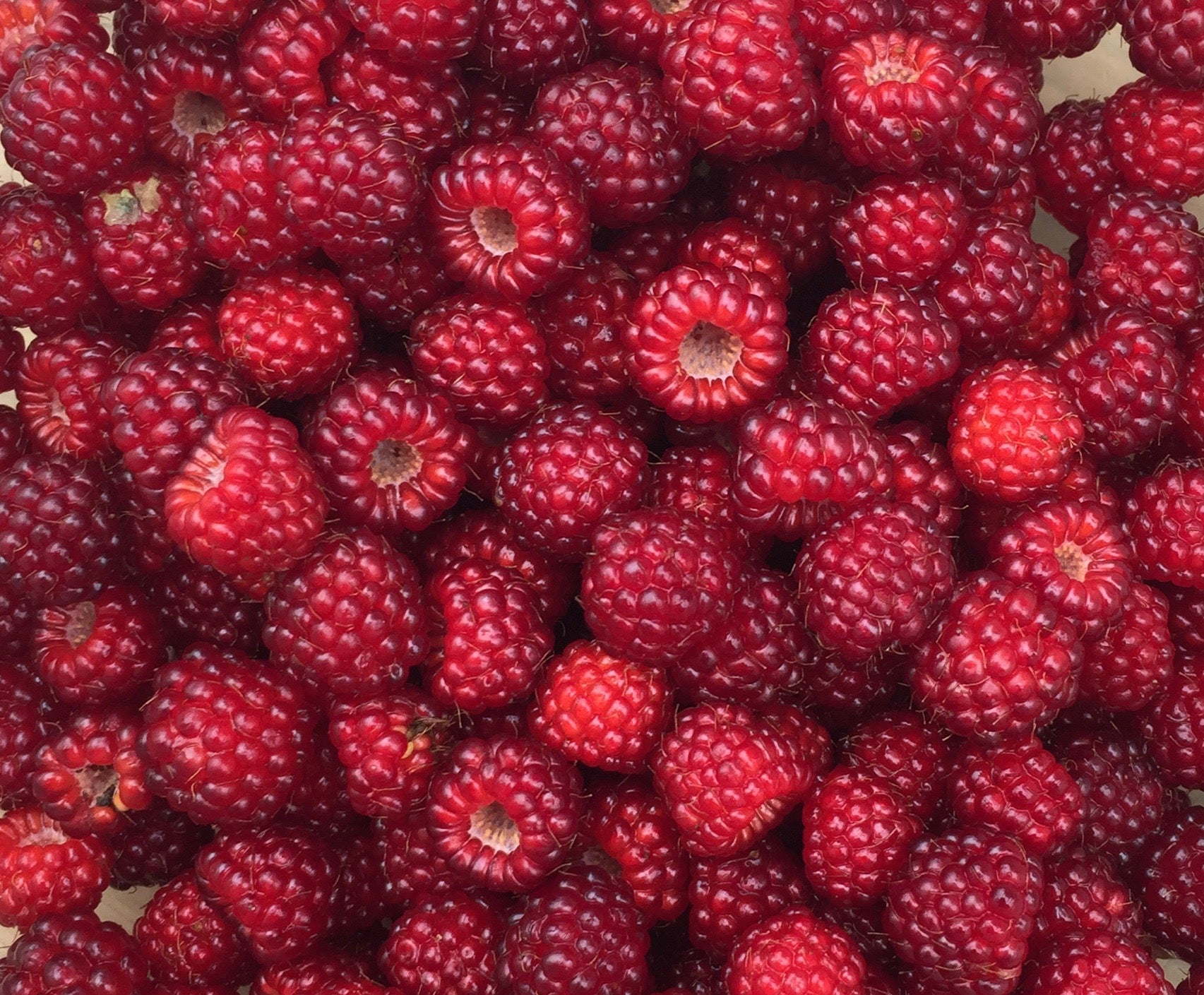
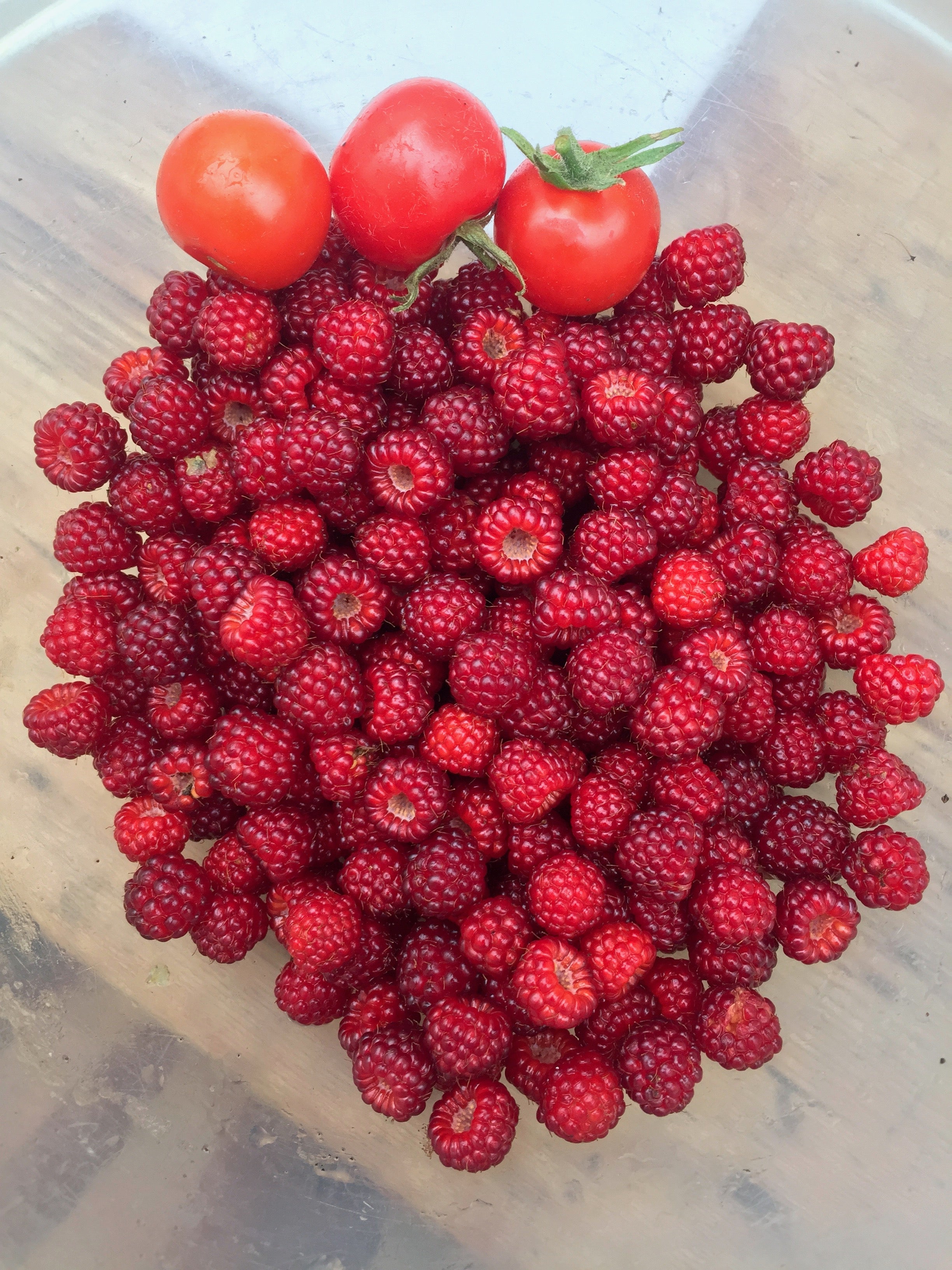
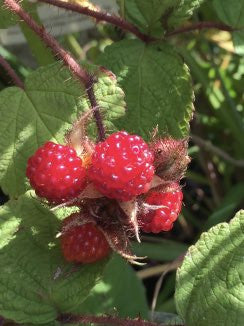
A raspberry with a rather theatrical wardrobe. Rubus phoenicolasius is an arching, deciduous bramble whose young stems, flower stalks and calyces are clothed in conspicuous red-purple glandular bristles, making it easy to identify even before the fruit appears. White to pale pink flowers are followed in summer by clusters of wonderfully glossy, translucent orange-red to wine-red berries.
Native to China, Japan and Korea, it grows in woodland margins, clearings, scrub and other moist, open habitats. It is adaptable, growing in sun or light shade, though good light and adequate moisture produce the best crops. In Britain it is fully hardy, and its long, arching stems can be trained against a wall or fence. Given freedom, however, it has the usual bramble tendency to consider the entire garden its personal property.
Edible aspects
And here is the really good bit. Japanese Wineberry produces exceptionally delicious fruit, and is arguably one of the finest of the ornamental brambles for the kitchen as well as the garden. The berries are juicy, soft and richly flavoured, with a wonderfully balanced combination of sweetness, gentle acidity and a distinctive raspberry-and-wine character. At full ripeness they are intensely moreish and particularly good eaten straight from the plant.
The translucent berries, held in their little cups of crimson bristles, are as ornamental as the plant itself and ripen over a useful period in summer. They are superb fresh, but also make excellent jams, jellies, pies, desserts and fruit drinks. Their delicate texture means they are best eaten soon after picking rather than stored, which is hardly a hardship when the temptation is to eat them as fast as they ripen.
Unlike many plants grown primarily for their flowers or foliage, this is one where the fruit genuinely earns its place. Grow it for the spectacular colouring, stay for the berries.
The species has been introduced outside its native range as an ornamental and fruiting plant, but has naturalised extensively in parts of Europe and North America and can become invasive. A little restraint in its planting position is therefore advisable.
Nomenclature: Described by Carl Johann Maximowicz in 1872 as Rubus phoenicolasius. The specific epithet refers to its conspicuous reddish-purple glandular hairs.
- Hardiness: H5 — approximately -15 to -10°C
- Height: 1.5–3 m
- Spread: 1.5–2 m
- Flowers: May–July
- Fruit: August–September
- Range: China, Japan and Korea
- Fruit: Excellent — exceptionally juicy and flavoursome, with a sweet, gently acidic raspberry-and-wine character
- Standard delivery: £9.99
- Free shipping on orders over £100
- Minimum order is £20
Read more: Shipping & Delivery