

Podophyllum pleianthum
Chinese Mayapple Berberidaceae
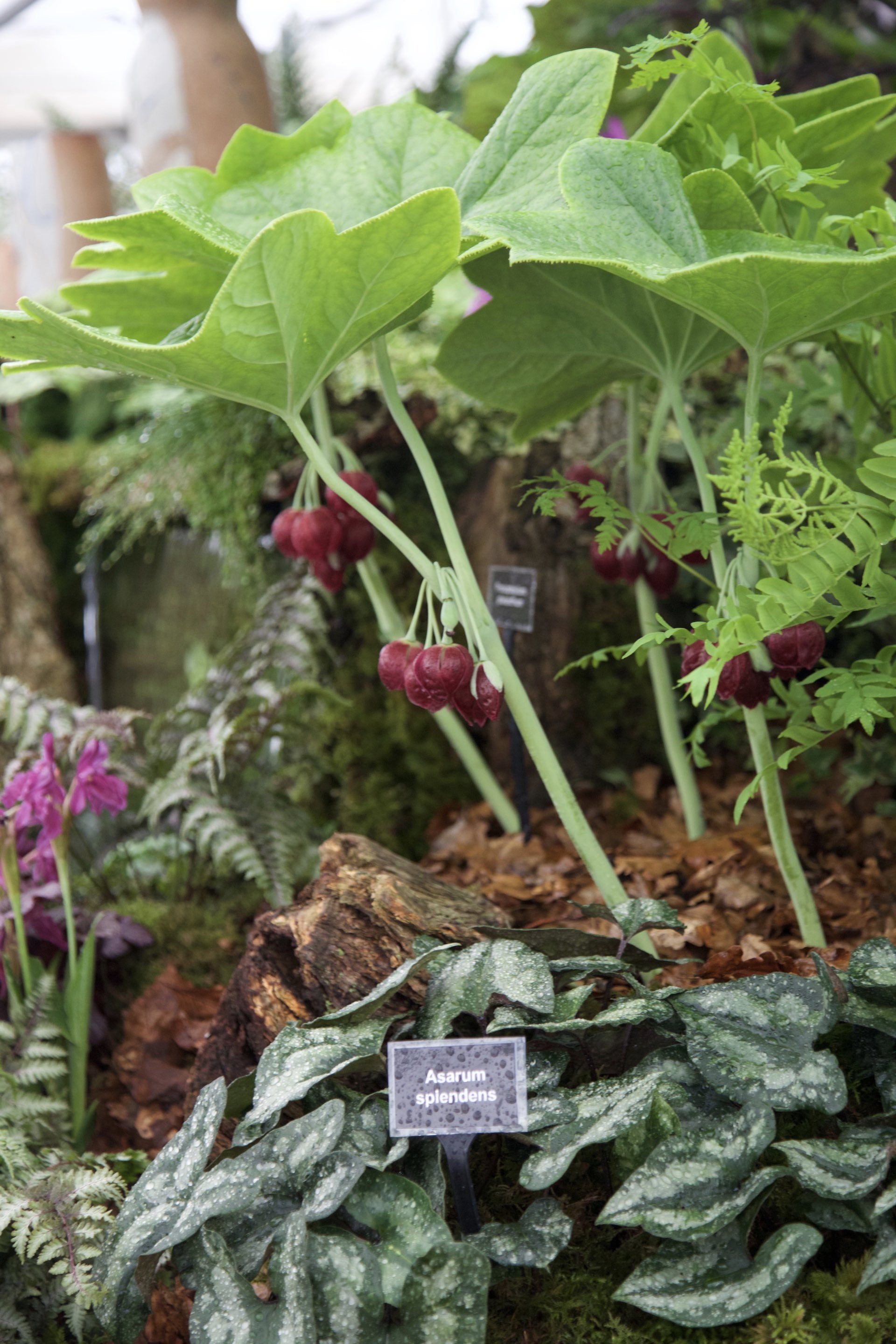
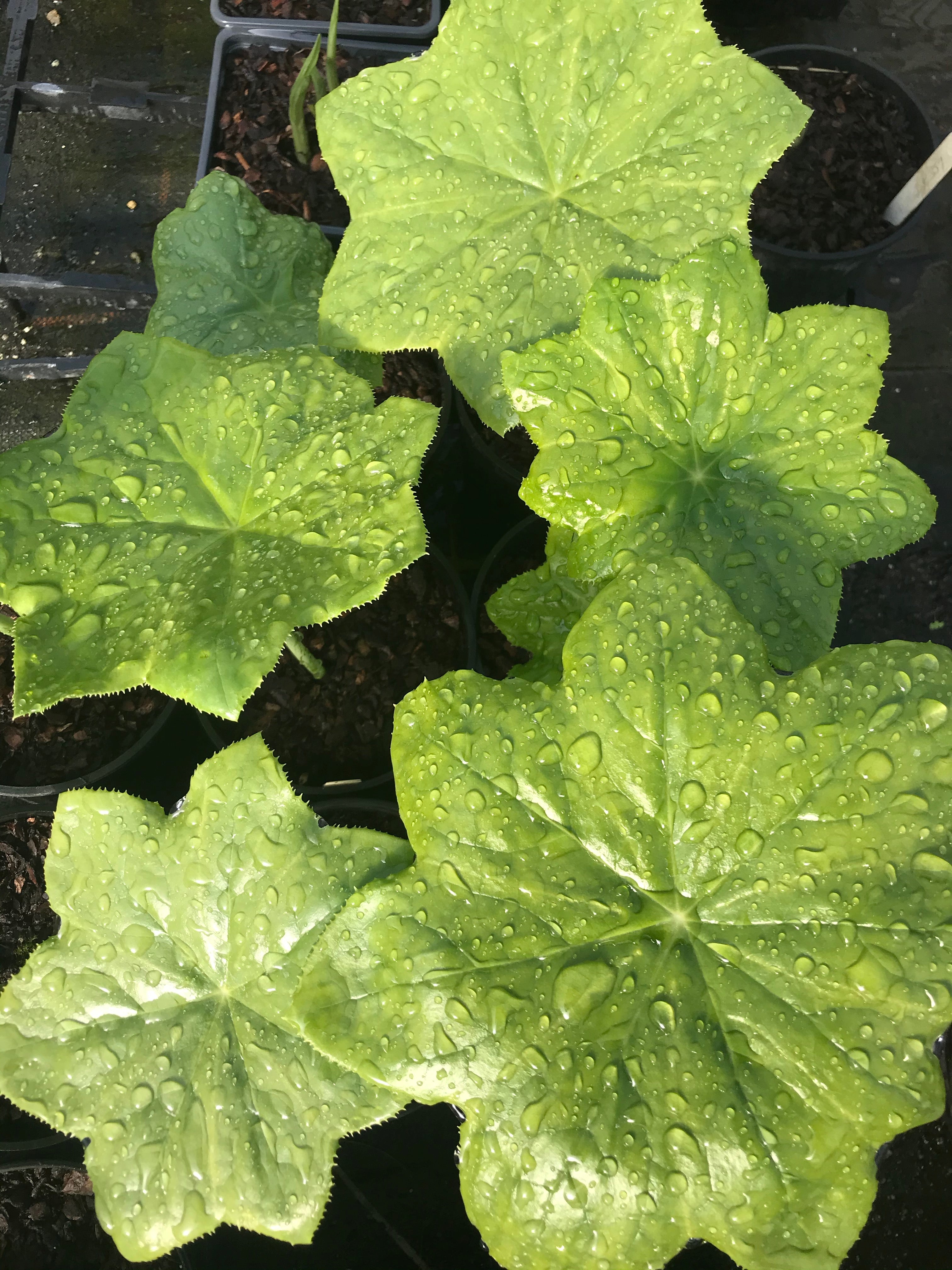
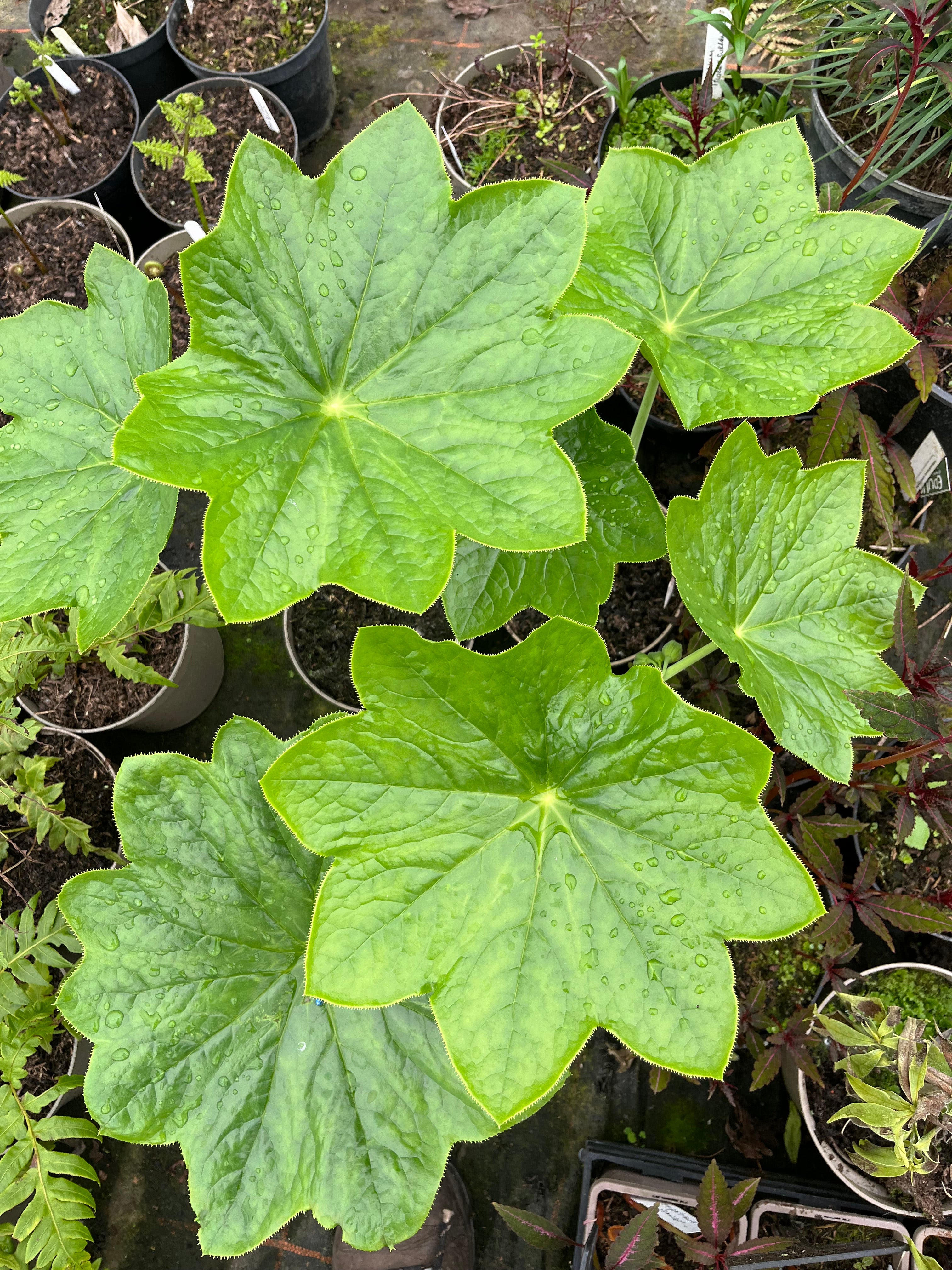
A magnificent Chinese May Apple and one of the most impressive woodland members of the genus, forming substantial clumps of large, glossy, star-shaped leaves which can reach 35cm across. Beneath the foliage hang clusters of wonderfully exotic, deep wine-red to purple, cup-shaped flowers in late spring and summer, followed by attractive deep red fruits. It is an excellent architectural plant for the woodland garden, where the bold foliage provides a superb foil for ferns, Trillium and other shade-loving perennials.
Native to south-central and south-eastern China and Taiwan, it occurs in forests, along streams and on grassy valley slopes, generally from around 400–1600m. Give it a moist, humus-rich soil which does not dry out in summer, with good drainage and full or partial shade. It is particularly valuable in deep shade, where the glossy foliage remains remarkably effective. The RHS recommends protecting it with a dry mulch in colder areas and currently rates it H4.
The name has had a rather peripatetic history: described by Henry Fletcher Hance in 1883, it was later transferred to Dysosma as Dysosma pleiantha. Kew now accepts Podophyllum pleianthum and treats Dysosma pleiantha, D. chengii and D. hispida, among others, as synonyms.
The plant has also been used medicinally in China and Taiwan, but it is toxic if eaten; the rhizomes contain podophyllotoxin and related compounds. It is therefore a plant to admire rather than experiment with in the kitchen.
Height: 50–75cm
Spread: 60–90cm
Flowering: May–July
Position: Full or partial shade
Soil: Moist, humus-rich and well drained
Hardiness: H4 (−10°C to −5°C)
*¹ Distinguishing Podophyllum pleianthum from P. versipelle: The two are easily confused in cultivation, and have historically been treated under the separate genus Dysosma. In P. pleianthum, the flower cluster is borne in the leaf axil, essentially at the base of the petiole, with the pedicels generally glabrous; the leaves are usually glossy, broadly rounded and divided into 5–9 broad lobes, with the lobes themselves unlobed. In P. versipelle, the flowers are borne near the base of the leaf blade rather than in the true leaf axil, on characteristically hairy, pendulous pedicels; the leaves are more deeply divided and their undersides are distinctly hairy, with the lobes generally narrower and more triangular. P. versipelle also tends to be a taller plant, reaching up to 150cm, whereas P. pleianthum is generally 20–60(–80)cm. These characters are particularly useful when plants are not in flower.
- Standard delivery: £9.99
- Free shipping on orders over £100
- Minimum order is £20
Read more: Shipping & Delivery