

Paris polyphylla
Herb Paris Melanthiaceae
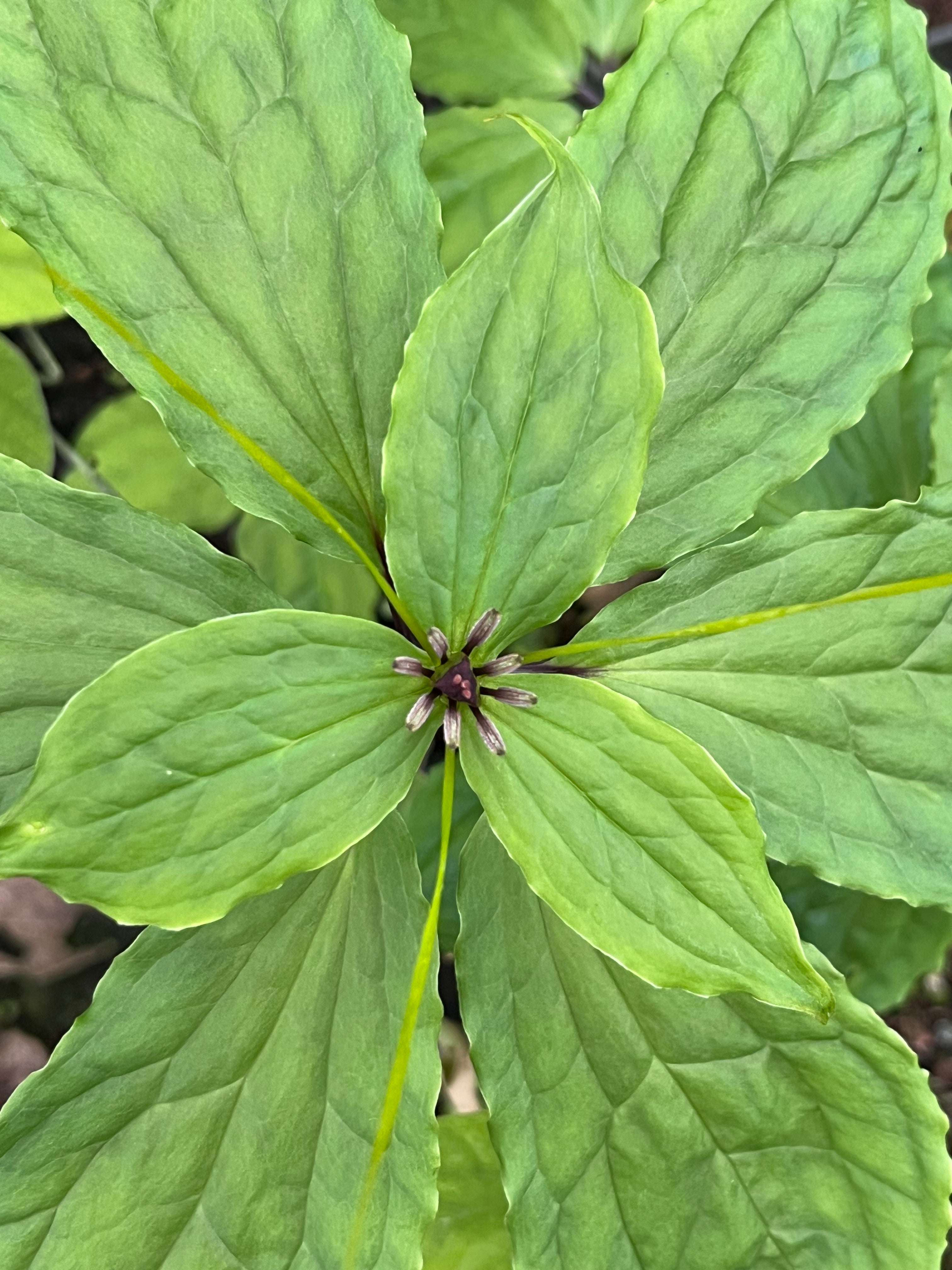
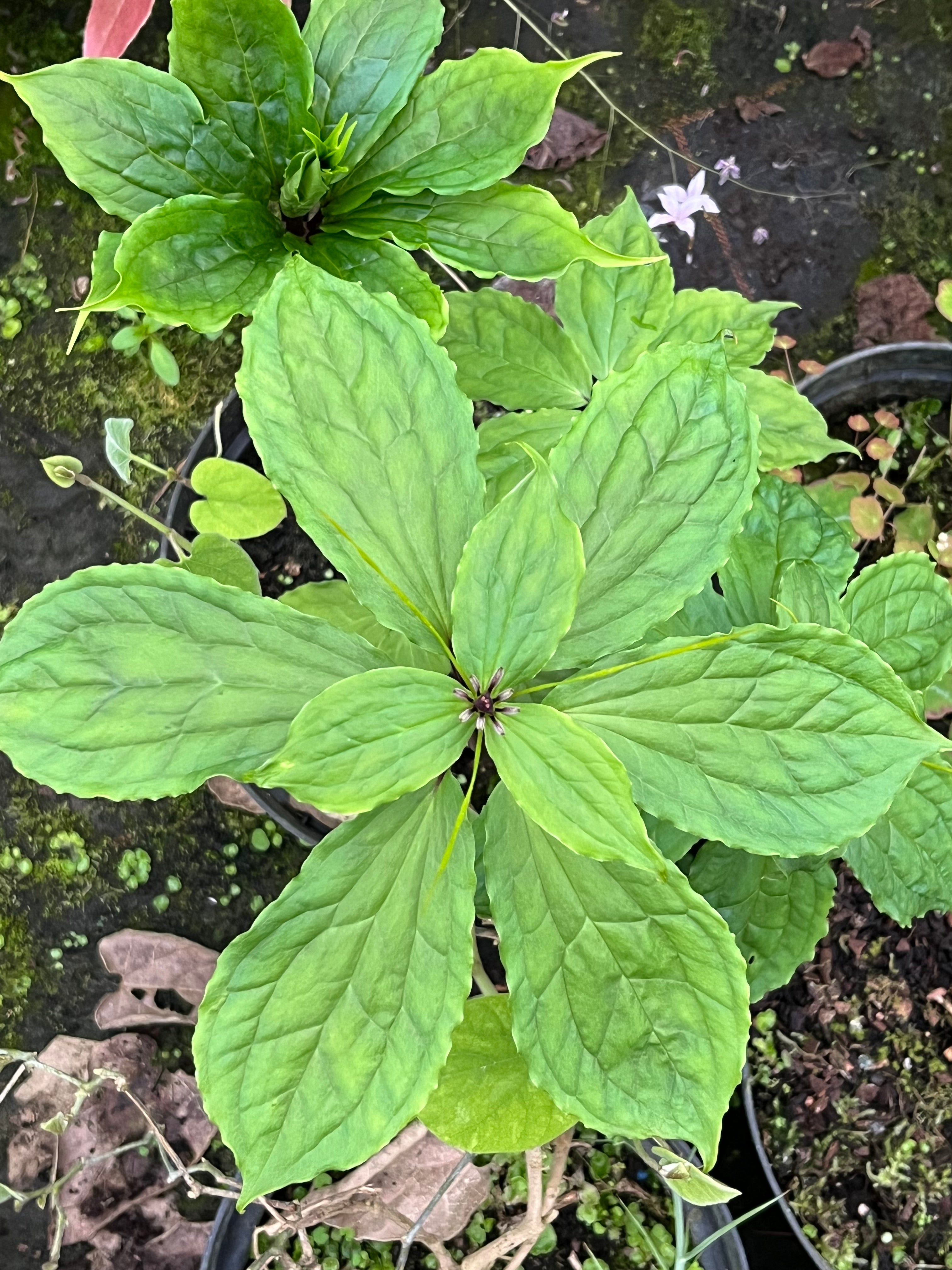
Herb Paris with a serious reputation in the Himalaya—and considerably more medicinal history than its rather innocent woodland appearance suggests. Paris polyphylla is a striking rhizomatous perennial, producing a solitary upright stem topped by a whorl of numerous lanceolate to broadly elliptic leaves, rather more than the four normally associated with P. quadrifolia. From the centre emerges a distinctive flower with greenish tepals and a conspicuous array of stamens, followed by a fleshy berry.
Its natural range extends from the Himalaya through Nepal, Bhutan and north-eastern India into central and southern China and northern Myanmar. It is a plant of cool, moist mountain woodland, generally favouring rich, humus-laden soils and dappled shade. Kew currently accepts P. polyphylla as a distinct species and records it as a rhizomatous geophyte of the temperate biome.
Its ethnobotanical importance is considerable. The dried rhizome, traditionally known in Chinese medicine as Chonglou (重楼), has been used for centuries, particularly for wounds, bleeding, inflammatory conditions and traumatic injuries. Traditional use is also documented among numerous Himalayan and Chinese ethnic groups, including Yi, Naxi and Bai communities. Kew’s Medicinal Plant Names Services records the rhizome, roots and whole plant in traditional medicinal use across Nepal, India, Tibet, China and Taiwan.
The rhizome contains steroidal saponins, which are considered important to its pharmacological activity. Modern research has investigated anti-inflammatory, antimicrobial and other properties, but this should not be confused with established clinical efficacy. Importantly, Paris species are not edible plants, and the medicinal rhizome requires traditional processing; inappropriate consumption can be toxic.
A superb plant for the serious woodland garden, where its architectural foliage and wonderfully strange flowers make it immediately recognisable.
Height: 30–60cm
Spread: 25–40cm
Flowering: May–June
Hardiness: H5, approximately -15 to -10°C
Position: Partial shade to shade
Soil: Moist, fertile, humus-rich, well-drained
Distribution: Himalaya to central China and northern Myanmar
Habit: Rhizomatous woodland perennial
Ethnobotanical use: Traditional medicinal rhizome, particularly for wounds, bleeding and inflammatory conditions
Special feature: Whorls of numerous leaves and a distinctive, many-stamened flower.
- Standard delivery: £9.99
- Free shipping on orders over £100
- Minimum order is £20
Read more: Shipping & Delivery