

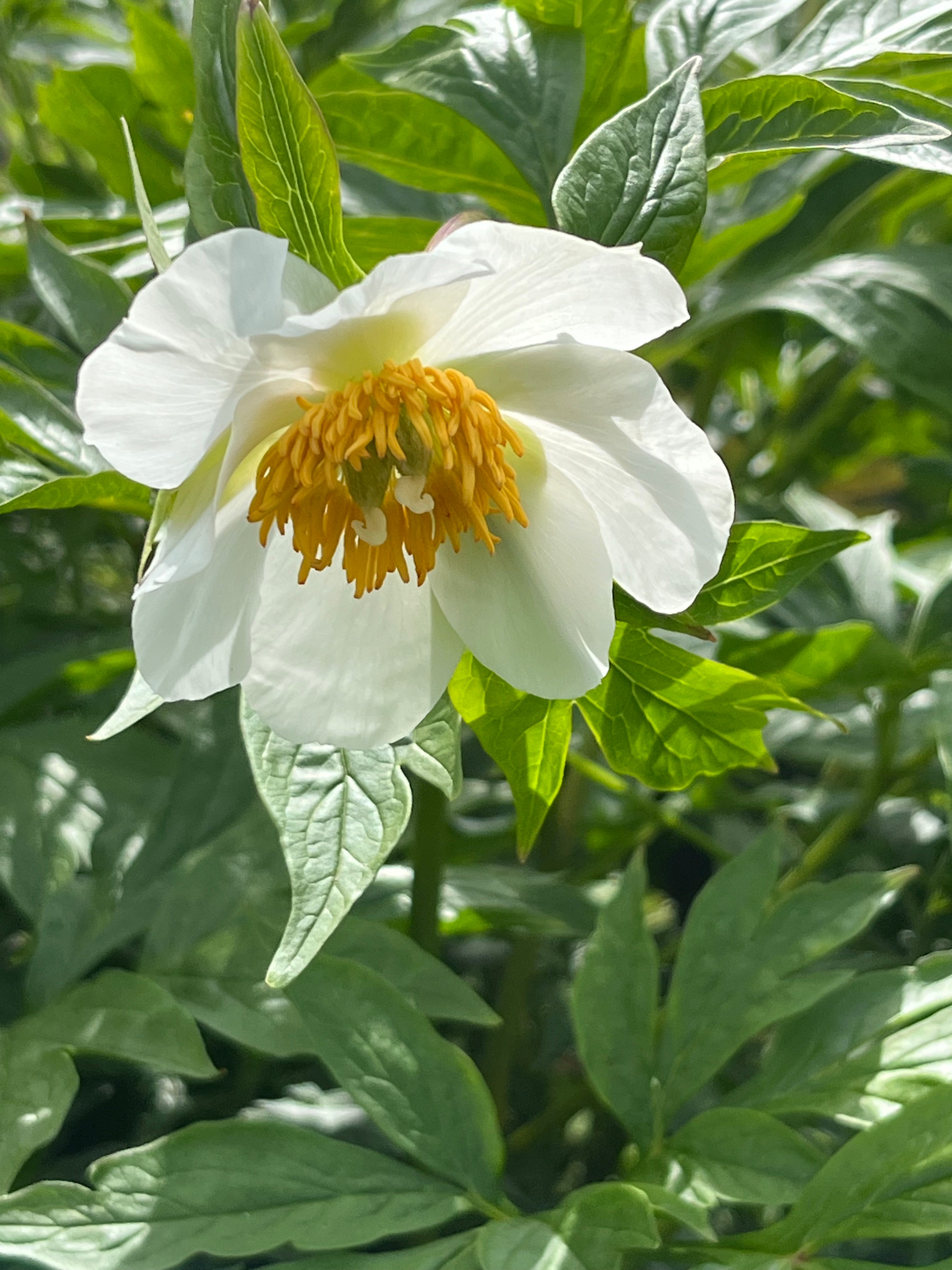
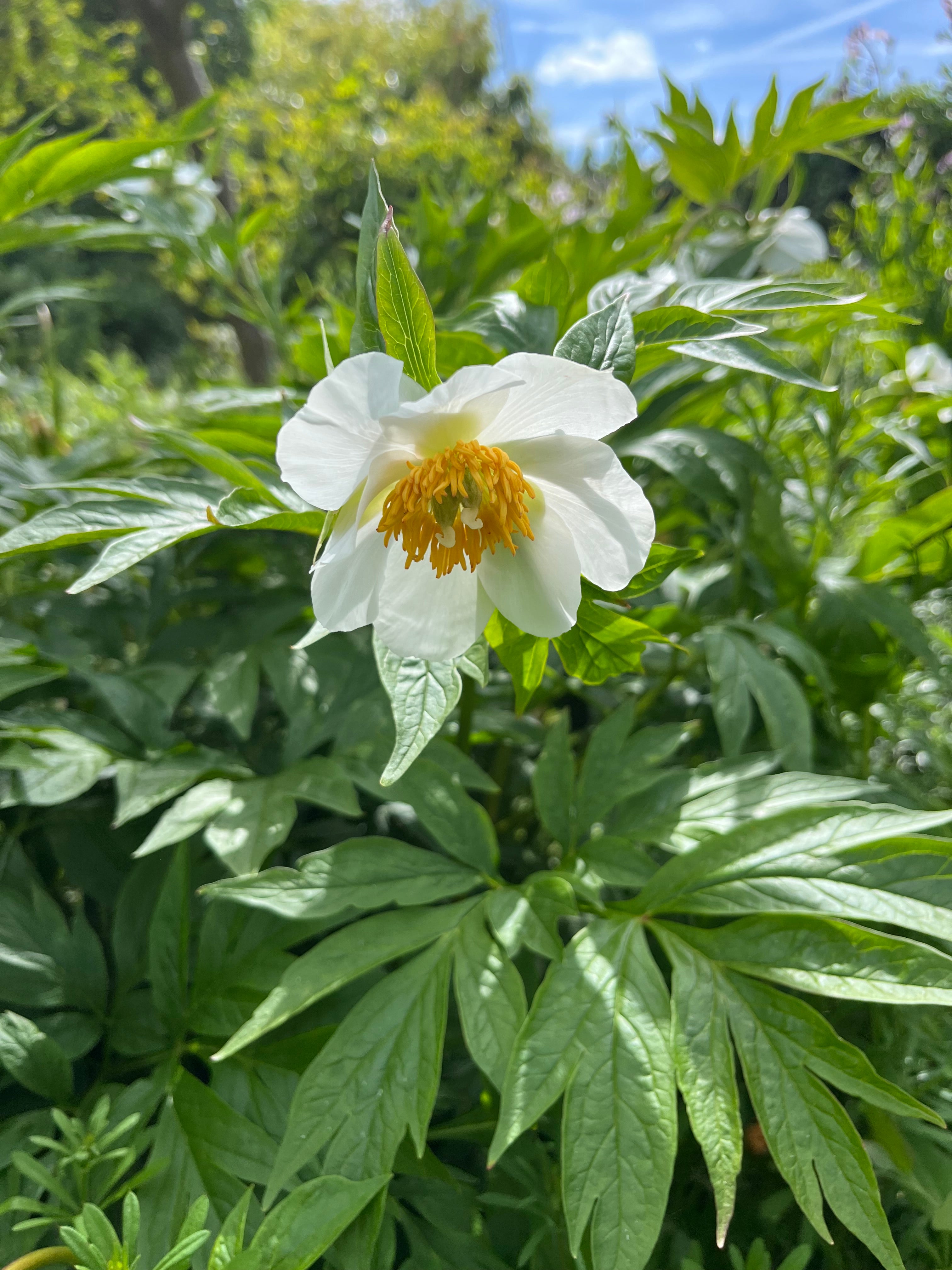

Paeonia emodi
Himalayan Peony Paeoniaceae
Paeonia emodi, the Himalayan Peony, is a magnificent herbaceous peony from the western Himalaya, forming substantial clumps of deeply divided foliage and producing large, pure-white flowers with a conspicuous boss of golden stamens. It is rather more than an ornamental curiosity, however: across the Himalaya it has a long and unusually well-documented history as both food plant and traditional medicine.
In the Garhwal Himalaya, the young leaves and tender shoots are collected as a vegetable. They may be boiled and washed to remove their bitterness, then eaten fresh, fermented or dried into chunks for winter use. Leaves and stems are also used for pickles and rayata. This is not merely historical folklore: ethnobotanical surveys have recorded P. emodi as an important wild food among mountain communities.
Its medicinal reputation is equally extensive. The roots and rhizomes have traditionally been used for stomach and intestinal complaints, colic, fever, pain, uterine disorders and nervous conditions, while preparations of the flowers have been used for diarrhoea. The seeds have traditionally been regarded as purgative and emetic. Such uses are part of traditional ethnomedicine rather than recommendations for home treatment, and the plant should not be regarded as a casually edible ornamental. (ScienceDirect)
A truly remarkable peony, therefore: spectacular in flower, edible in its traditional spring harvest, and deeply embedded in Himalayan ethnobotany.
Height: 60–90 cm
Spread: 60–90 cm
Flowering: May–June
Hardiness: H6, approximately −20 to −15°C
Position: Sun or light shade
Soil: Deep, fertile, moist but well-drained soil
Edible: Young leaves and tender shoots, traditionally cooked and prepared as a vegetable
Ethnobotanical: Important Himalayan food and medicinal plant; traditionally used for digestive, inflammatory, gynaecological and other ailments
- Standard delivery: £9.99
- Free shipping on orders over £100
- Minimum order is £20
Read more: Shipping & Delivery