

Onoclea sensibilis 'Hortvs Undulata'
Sensitive Fern Onocleaceae
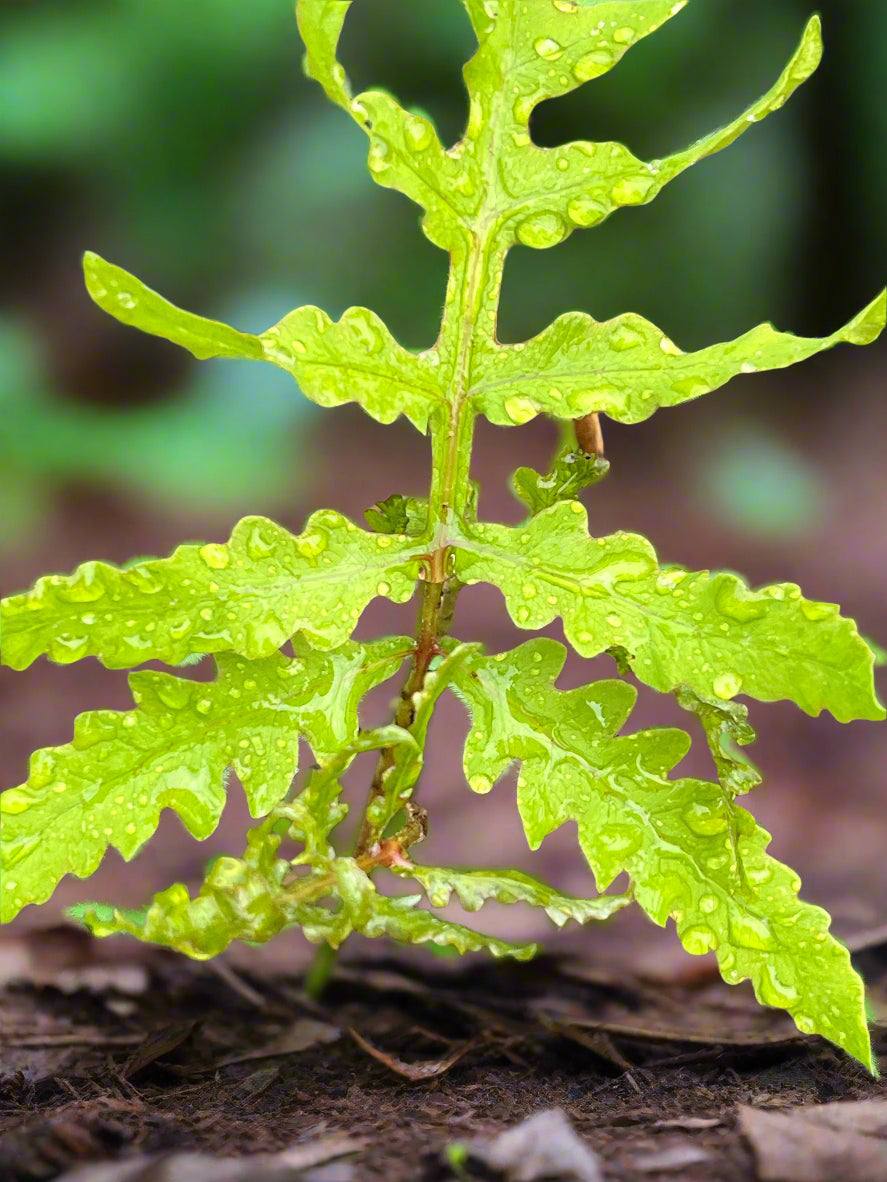
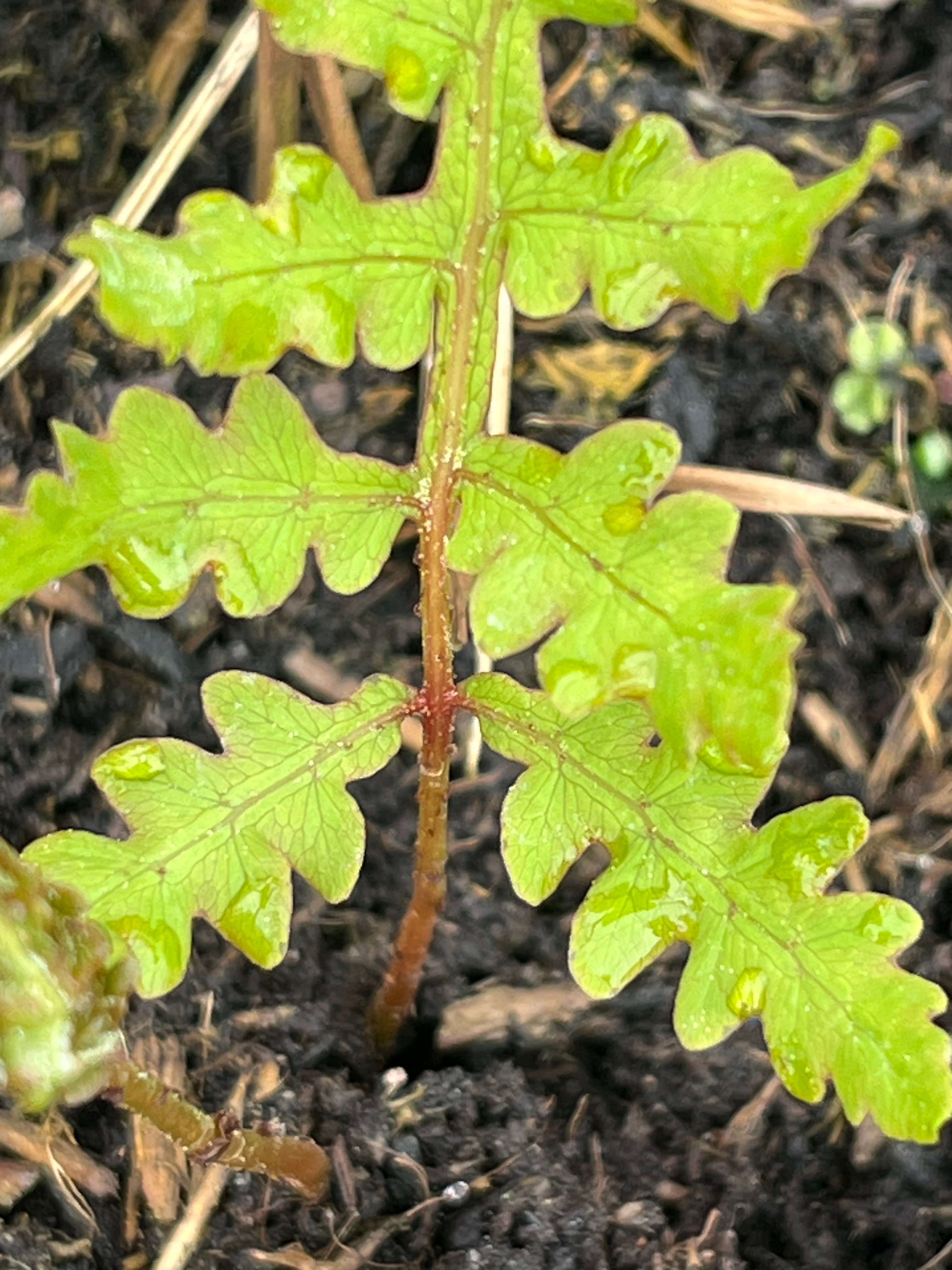
A particularly handsome Dutch selection of the Sensitive Fern, Onoclea sensibilis ‘Hortvs Undulata’ has broad, fresh-green sterile fronds with distinctly undulating, crinkled margins, giving this already exuberant fern an extra degree of character. The name is suitably descriptive: hortvs is the classical Latin spelling of hortus, meaning garden, while undulata means wavy or undulating.
Onoclea sensibilis is native across much of eastern and central North America, from Canada southwards through the eastern United States, with a separate Asian range extending through eastern Russia, Korea, Japan and China. In nature it favours wet woodland, marshy ground and the margins of streams and ponds.
‘Hortvs Undulata’ is of Dutch horticultural origin, selected for its distinctive foliage. The precise date of introduction and the identity of the original selector do not appear to be well documented, so it is best not to attach an unsupported name or date to its history. It is nevertheless a particularly attractive form and deserves wider cultivation.
Like the species, it produces two quite different types of frond. The soft, spreading sterile fronds emerge in spring and form a substantial green clump, while the curious dark, contracted fertile fronds appear later and persist through winter. The common name Sensitive Fern refers to the foliage’s susceptibility to frost, after which the green fronds collapse rather dramatically—fortunately the rhizome is considerably less sensitive and returns reliably each spring.
Give it permanently moist, humus-rich soil in shade or dappled shade and it will make an excellent colony-forming fern for woodland, pond margins, stream sides and bog gardens. It spreads by creeping rhizomes, so allow it room to wander. A Dutch fern with a distinctly unruly haircut.
Cultural note: The young fiddleheads of O. sensibilis were traditionally gathered and cooked as a spring vegetable by Indigenous peoples of eastern North America, and various medicinal uses have also been recorded. Its persistent dark fertile fronds are additionally useful in dried arrangements.
Garden use: Ideal for damp woodland, watersides, bog gardens and naturalistic planting where its spreading habit can be accommodated. Particularly valuable for foliage texture and its unusual winter fertile fronds.
Hardiness: H5 (-15 to -10°C)
Flowering: Fern – no flowers; fertile fronds produced in late summer and persisting through winter
Height: 50–100 cm
Spread: 150–250 cm
- Standard delivery: £9.99
- Free shipping on orders over £100
- Minimum order is £20
Read more: Shipping & Delivery