

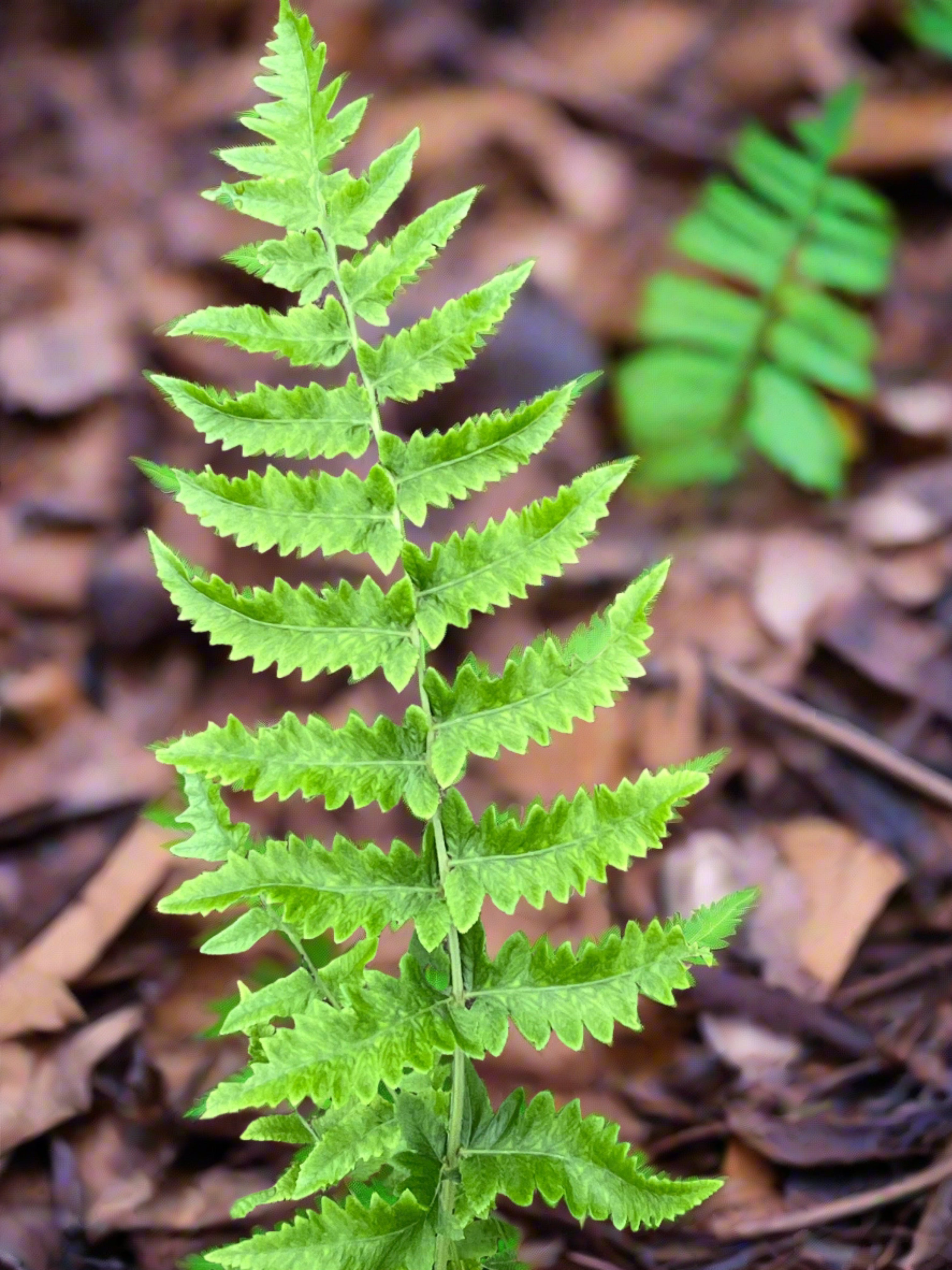
Diplazium esculentum
The Vegetable Fern Athyriaceae
A fern with an unusually useful second career, Diplazium esculentum is one of the world’s most important edible ferns, widely gathered and cultivated as a vegetable across tropical and subtropical Asia and into the western Pacific. Its native range stretches from the Himalayas and India through China, Japan and Southeast Asia to the Philippines, Indonesia, New Guinea and numerous Pacific islands. Kew recognises it as an accepted species, growing principally in the wet tropical biome.
The fronds are large, upright and elegantly divided, emerging from a short rhizome to form a substantial clump. In nature it is typically found beside rivers and streams, in marshy ground, paddy fields and moist forest, often in light or partial shade. It appreciates fertile, moisture-retentive soil but is more adaptable than its tropical origins might suggest, provided it is never allowed to become dry. (
Its importance, however, is culinary. The young, tightly curled shoots—the fiddleheads—are harvested before the fronds unfurl and cooked as a vegetable. They are eaten extensively in India, Nepal, Bangladesh, Thailand, Malaysia, Vietnam, Indonesia, the Philippines and elsewhere, appearing in curries, soups and stir-fries and also being pickled. In the Himalayan region, the young fronds are widely marketed as a seasonal wild vegetable, including under local names such as ningro, niuro and koche sag. (PubMed Central (PMC))
The culinary tradition is sufficiently important that D. esculentum is commonly known simply as the Edible Fern. Tender fronds are generally cooked rather than eaten raw; traditional preparation includes boiling, frying or incorporating them into vegetable dishes. Mature fronds have also been used for fodder and green manure, while the plant has a long history of traditional medicinal use in several Asian cultures.
For the garden, this is a handsome fern for warm, sheltered, permanently moist positions, particularly around ponds, streams or in a humid greenhouse. In a British climate it is best treated as a tender or frost-sensitive fern rather than one for the open garden. Botanically useful, aesthetically handsome and genuinely edible—this is one fern where the Latin epithet esculentum is making a promise it actually keeps.
Garden use: Tropical and subtropical woodland planting, pond margins, bog gardens and warm conservatory or greenhouse cultivation. Particularly interesting for ethnobotanical collections and edible-plant gardens.
Edible: Young, tightly coiled fronds are traditionally harvested and cooked as a vegetable. Do not eat uncooked fronds; only correctly identified, traditionally prepared young shoots should be consumed.
Hardiness: H1c–H2 (approximately 5–10°C minimum; frost tender)
Flowering: Fern – no flowers; spores produced on mature fronds
Height: 60–150 cm
Spread: 60–120 cm
Seasonal interest: Year-round in frost-free conditions
- Standard delivery: £9.99
- Free shipping on orders over £100
- Minimum order is £20
Read more: Shipping & Delivery