

Coniogramme serrulata
Bamboo Fern Pteridaceae
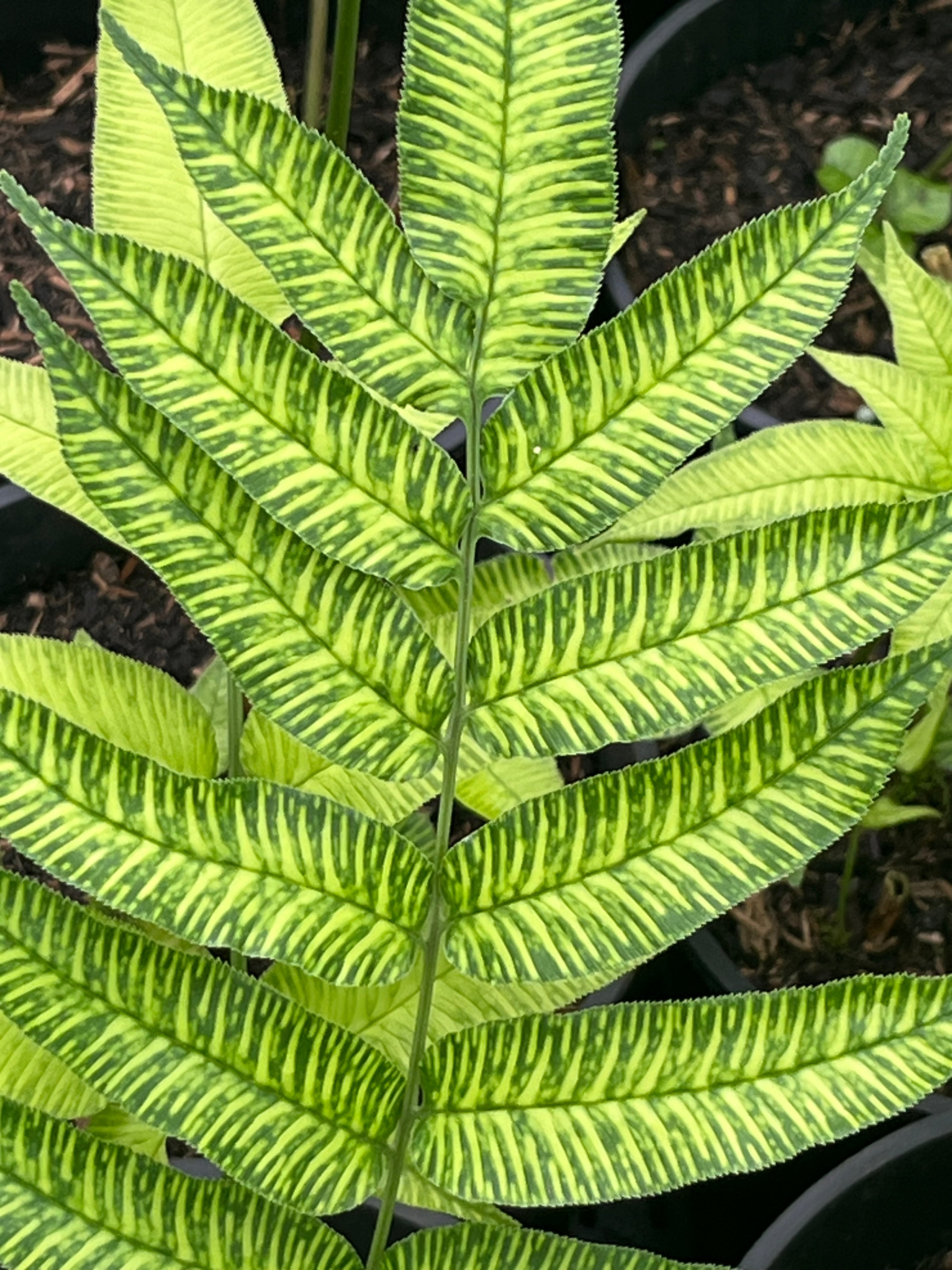
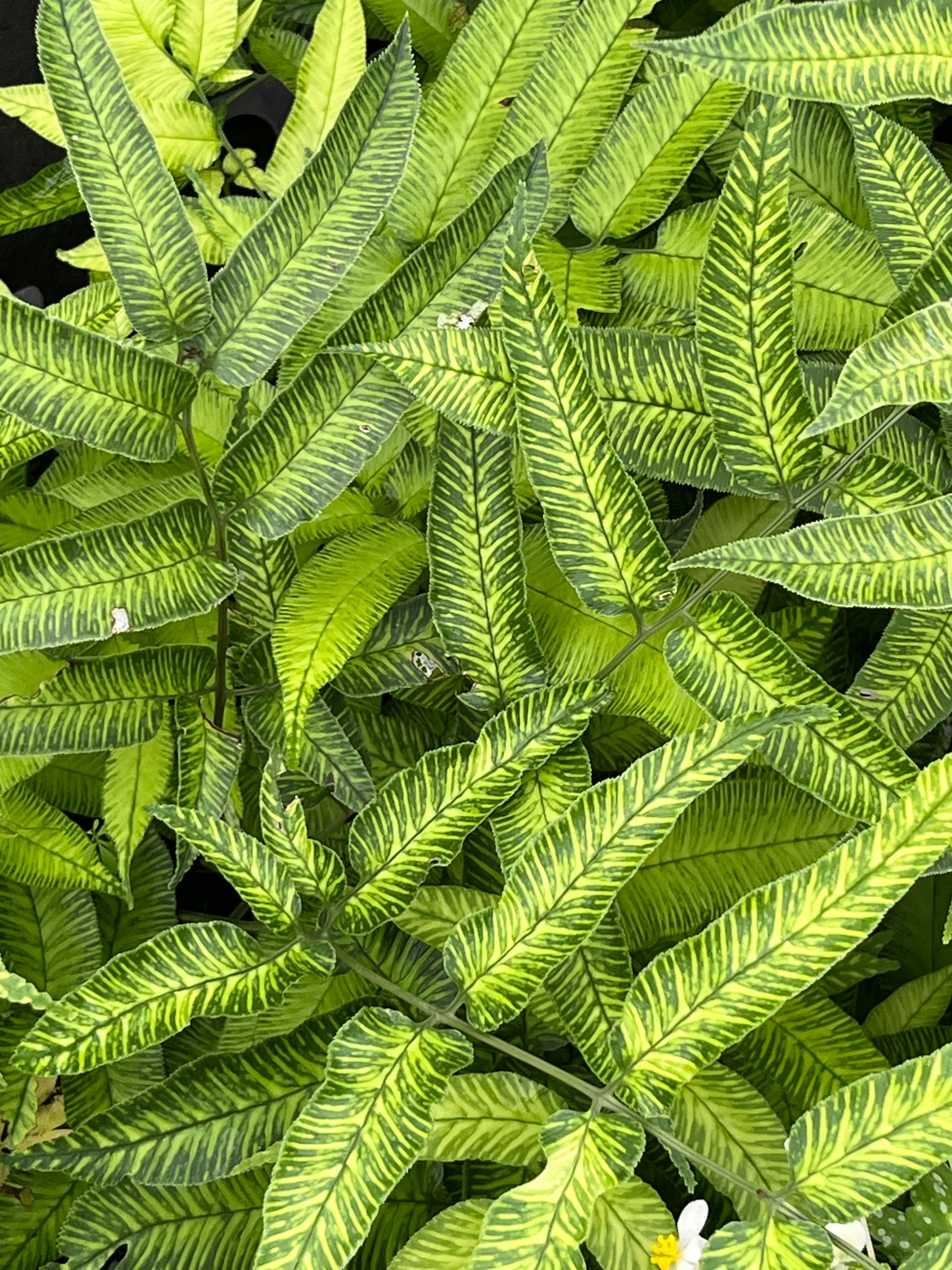
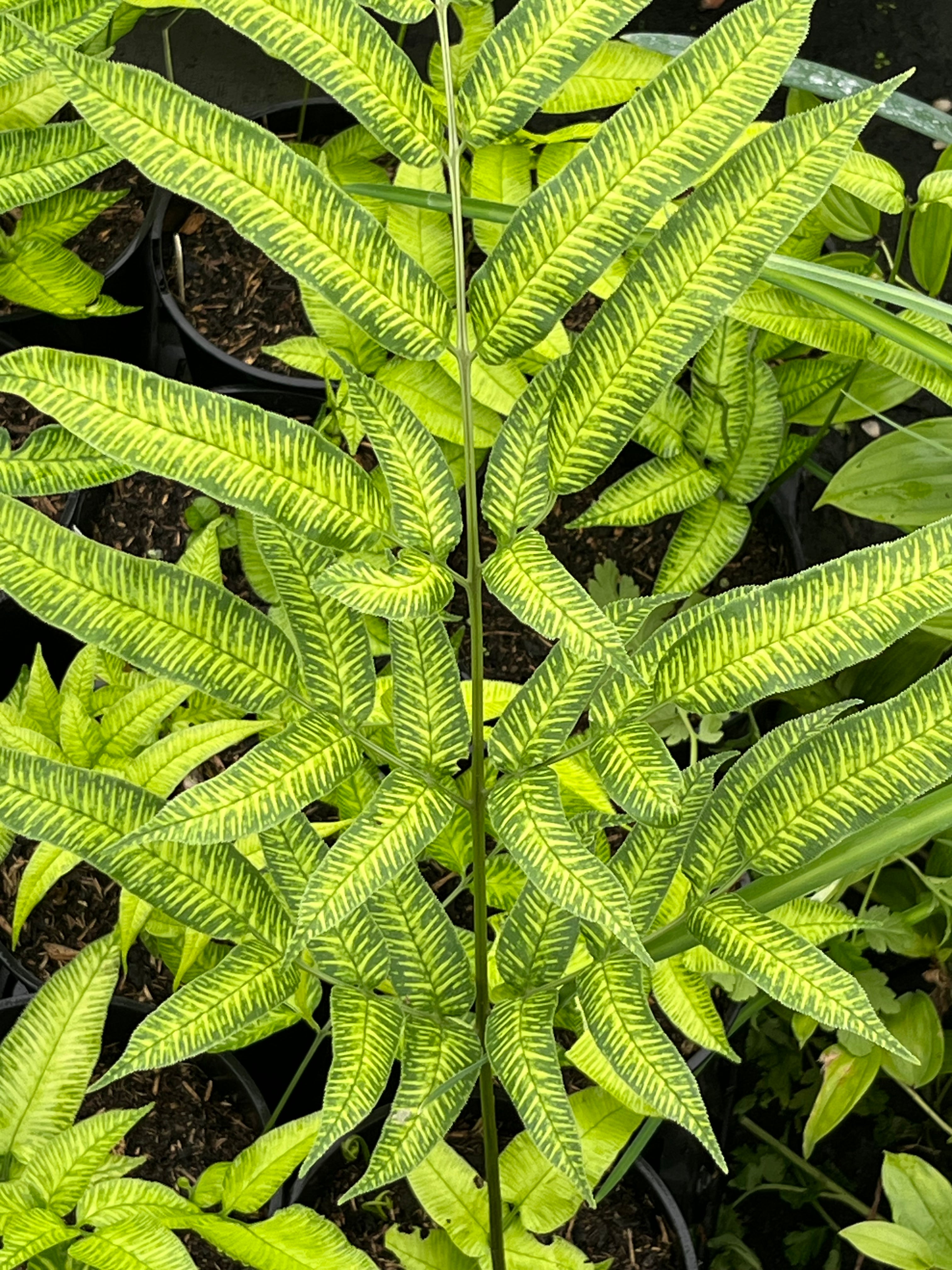
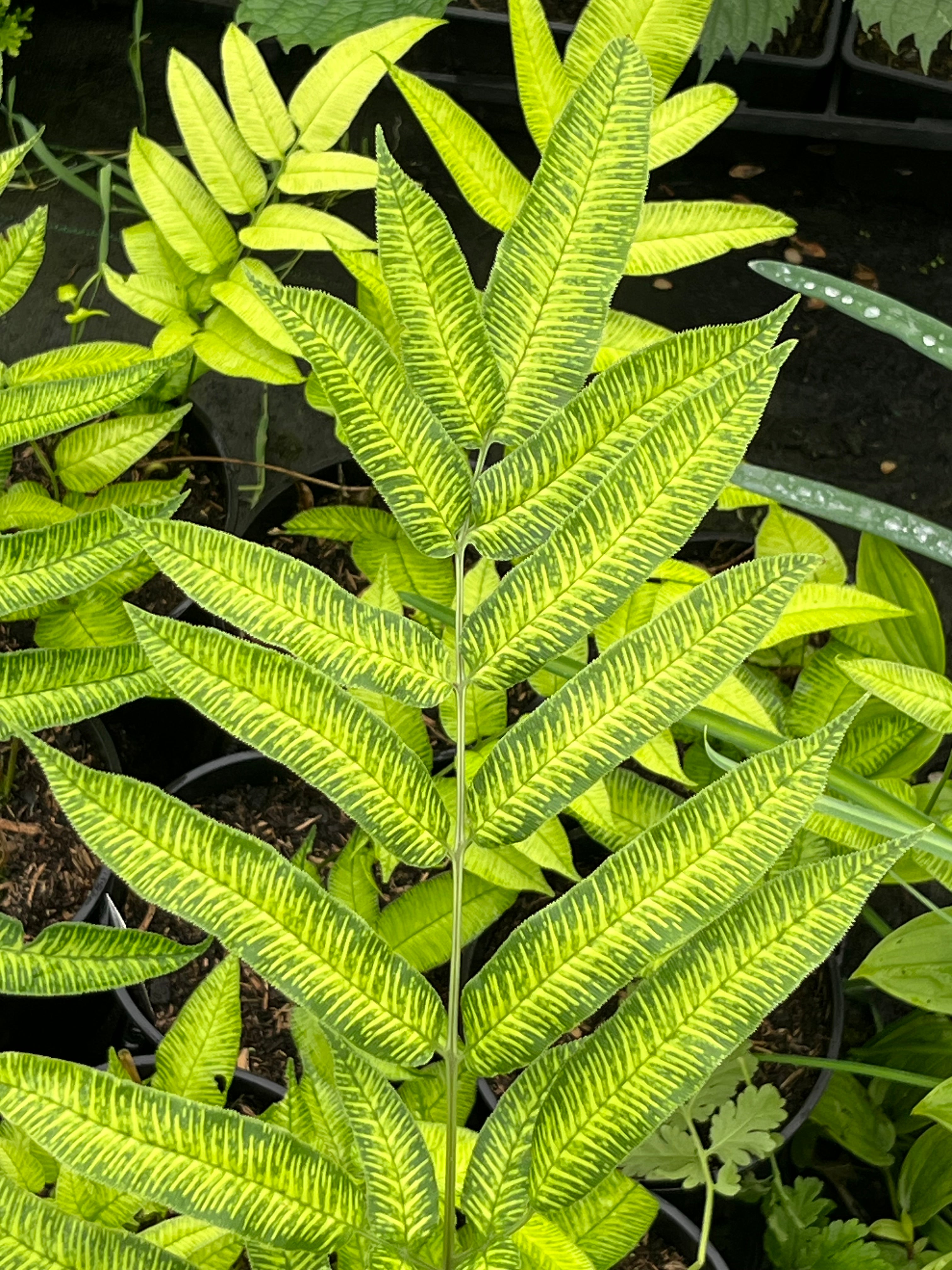
Coniogramme serrulata is a handsome and rather underappreciated Asian fern, producing broad, elegant fronds that have the slightly exotic appearance of a fern that has been taking itself rather seriously. The fronds arise from a stout, creeping rhizome and can reach around 1 m tall, with a broadly ovate-lanceolate blade divided into several pairs of lateral pinnae. The terminal sections are particularly attractive, with long, tapering tips and margins carrying the small, characteristic teeth that give the species its name.
The new fronds emerge a fresh green before developing into substantial, somewhat leathery-looking foliage, the stipes attractively straw-coloured and often marked with purple. Unlike some of the more delicate Coniogramme, C. serrulata has considerable presence, making a fine architectural plant for the woodland garden rather than merely a filler for the fernery.
Its natural distribution is impressively broad, extending from Pakistan and the Himalaya through China, Japan, Korea and Taiwan to Southeast Asia, the Philippines, Java and the western Indian Ocean, including Madagascar and Réunion. It generally occurs in temperate or montane woodland habitats, often in humid conditions.
The nomenclature has been almost as well-branched as the fern itself. Originally described by Carl Ludwig Blume as Gymnogramma serrulata in 1828, it was transferred to Coniogramme by Antoine Laurent Apollinaire Fée in 1852, giving the currently accepted combination Coniogramme serrulata (Blume) Fée. A considerable number of names have subsequently been applied to plants now included within the species, including Coniogramme lancangensis, C. squamulosa, C. subcordata and C. fraxinea var. serrulata.
Cultivation: A superb fern for a cool, shady position in humus-rich, moisture-retentive soil. It appreciates shelter from drying winds and performs particularly well where summer moisture is reliable, though it should not be treated as a bog plant. Give it room to develop its broad fronds and it will make a particularly handsome specimen beneath deciduous trees or among other woodland perennials.
Height: 80–100 cm
Spread: 80–120 cm
Flowering period: Non-flowering; spores produced on the undersides of the fronds
Position: Partial shade to shade
Soil: Humus-rich, fertile and reliably moist
Hardiness: Approximately H5–H6, with good potential for much of Britain when established and protected from exposed winter conditions.
- Standard delivery: £9.99
- Free shipping on orders over £100
- Minimum order is £20
Read more: Shipping & Delivery