

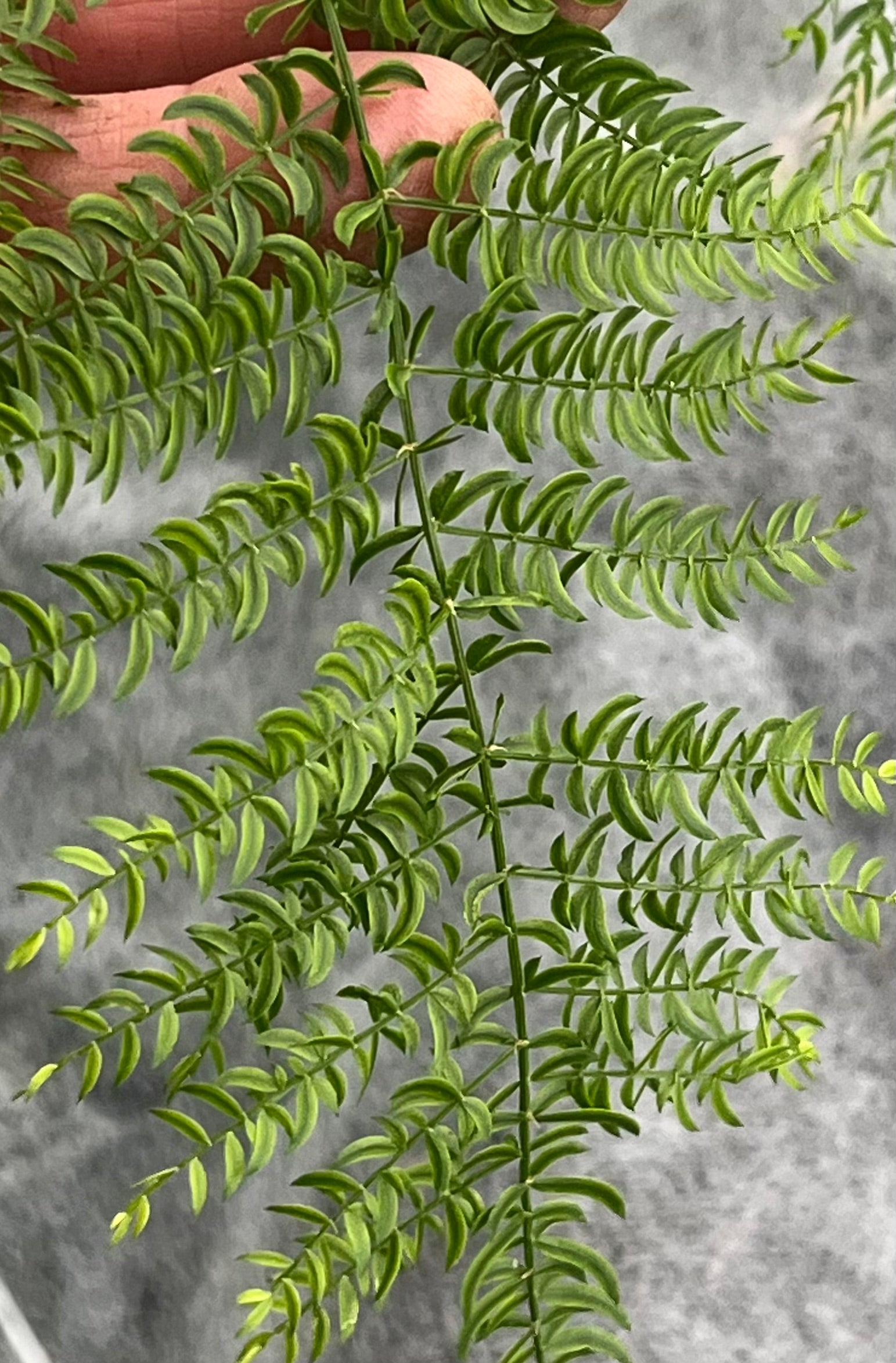
Asparagus filicinus
Wild Asparagus Asparagaceae
An altogether more elegant member of the asparagus family, Asparagus filicinus is a graceful, fern-like perennial. Rather than the familiar edible asparagus spears, it produces slender, erect to slightly scrambling stems clothed in neat clusters of flattened, curved cladodes, giving the plant an almost feathery appearance. Small greenish to reddish flowers are followed by rounded berries that mature from red to almost black.
Native range and habitat
It is from the Himalaya, China and mainland South-East Asia. It is a plant of cool, moist woodland, thickets and shady forest margins, generally occurring from around 1,200m to over 3,000m.
Cultivation
In cultivation, give it partial shade, fertile humus-rich soil and reliable moisture, with good drainage. It makes a particularly attractive foliage plant where a softer, more naturalistic asparagus is wanted.
Ethnobotany
There is also a fascinating ethnobotanical history. In parts of the Himalaya the tuberous roots have traditionally been harvested medicinally. In Nepal they are known as ban kurilo, while in parts of India the plant has been recorded as sahasimuli and sharanoi. Traditional uses include preparations for digestive complaints, rheumatism, diarrhoea, dysentery and skin conditions, as well as use as a diuretic and tonic. In Dolpo, Nepal, the roots have also been used for lactation and to wash hair and wounds.
Key facts
This is not the asparagus to harvest for dinner: its principal horticultural attraction is its elegant fern-like foliage rather than culinary shoots.
Height: 60–120cm
Spread: 60–100cm
Flowering: May–July
Hardiness: H5 (-15 to -10°C)
Best conditions: Partial shade; moist, fertile, humus-rich, well-drained soil.
- Standard delivery: £9.99
- Free shipping on orders over £100
- Minimum order is £20
Read more: Shipping & Delivery