

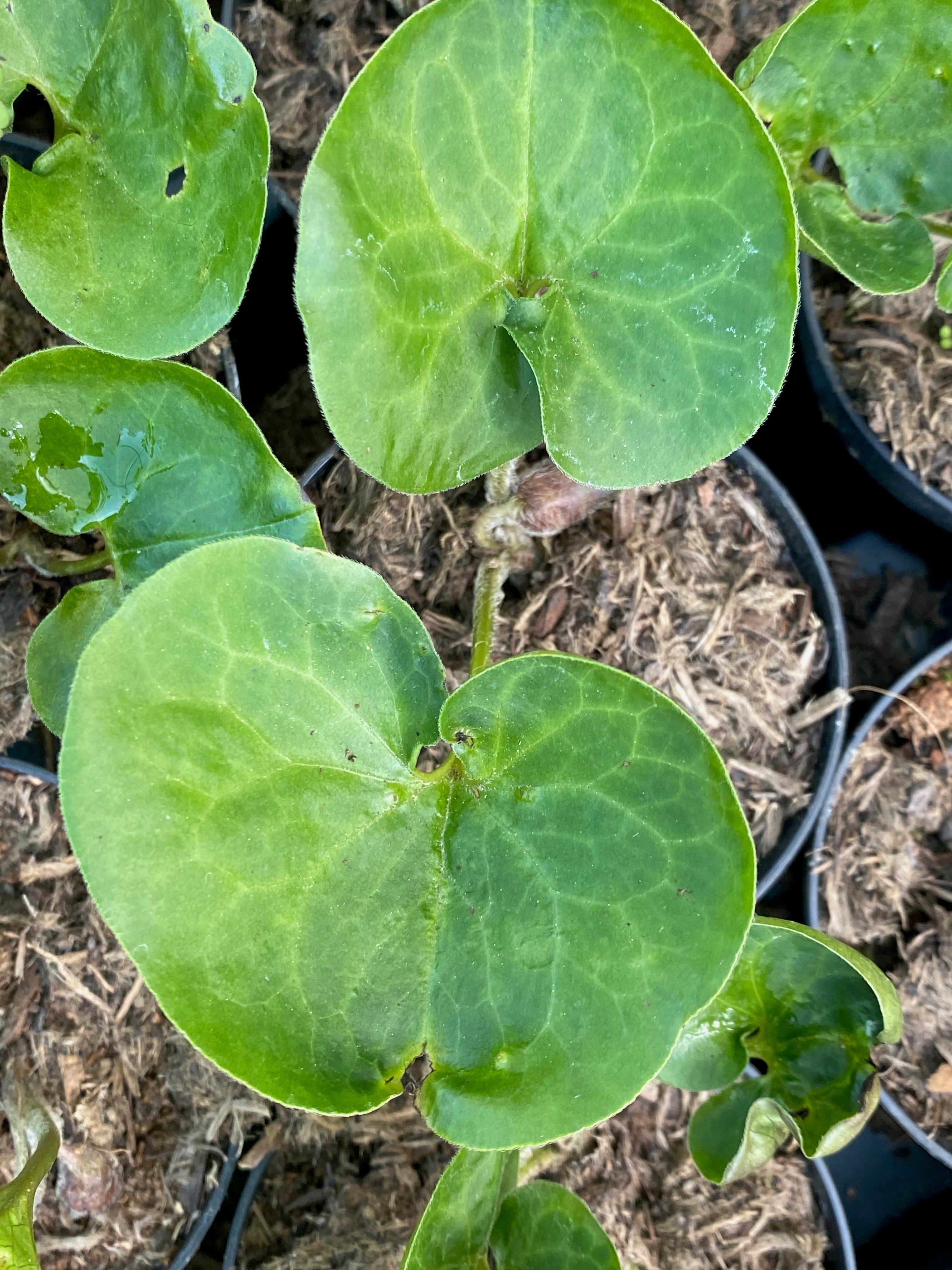
Asarum europaeum 'Pontic Form'
Wild Ginger, Asarabacca Aristolochiaceae
A particularly useful form of Asarabacca, selected for its robust growth, substantial evergreen foliage and ability to cope surprisingly well with dry shade. Asarum europaeum forms low, slowly spreading carpets of rounded, kidney-shaped leaves, with the curious purple-red flowers tucked discreetly beneath them in spring. The ‘Pontic Form’ is notably larger and more vigorous than the common Mediterranean form, yet remains sufficiently restrained to make an excellent woodland groundcover. (Edulis)
The name “Pontic” is an appropriate nod to the Pontic region and flora of south-eastern Europe, although the precise wild collection provenance of this horticultural form is not currently documented in the sources available to us. It should therefore be treated as a named horticultural form rather than attributing an unverified collection locality.
Like other A. europaeum, it has a long ethnobotanical history as asarabacca. Its aromatic rhizomes were traditionally used in European herbal medicine, particularly as an emetic and purgative and for respiratory complaints. These uses are of historical interest only: Asarum contains potentially toxic compounds, including aristolochic acids, and the plant should not be consumed or used medicinally.
Grow in partial to full shade, preferably in humus-rich soil, although the ‘Pontic Form’ is particularly valuable for dry shade once established. A quietly excellent plant for beneath trees and shrubs — the sort of groundcover that gets on with the job while flashier neighbours demand applause.
Height: 10–15cm
Spread: 40–60cm
Flowering: March–May
Hardiness: H6 (-20 to -15°C)
Best conditions: Partial to full shade; humus-rich, well-drained soil; drought tolerant once established.
- Standard delivery: £9.99
- Free shipping on orders over £100
- Minimum order is £20
Read more: Shipping & Delivery