

Allium hookeri var. muliense
Yellow-Flowered Hooker’s Onion Amaryllidaceae
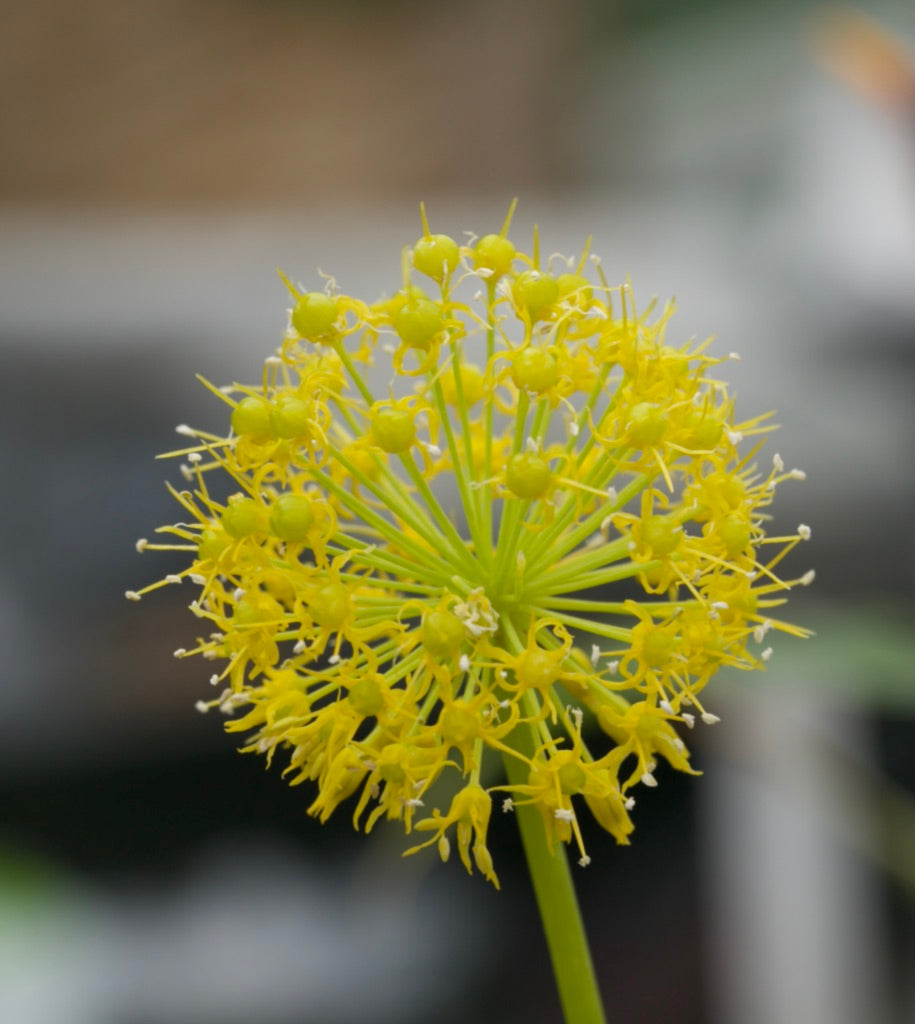
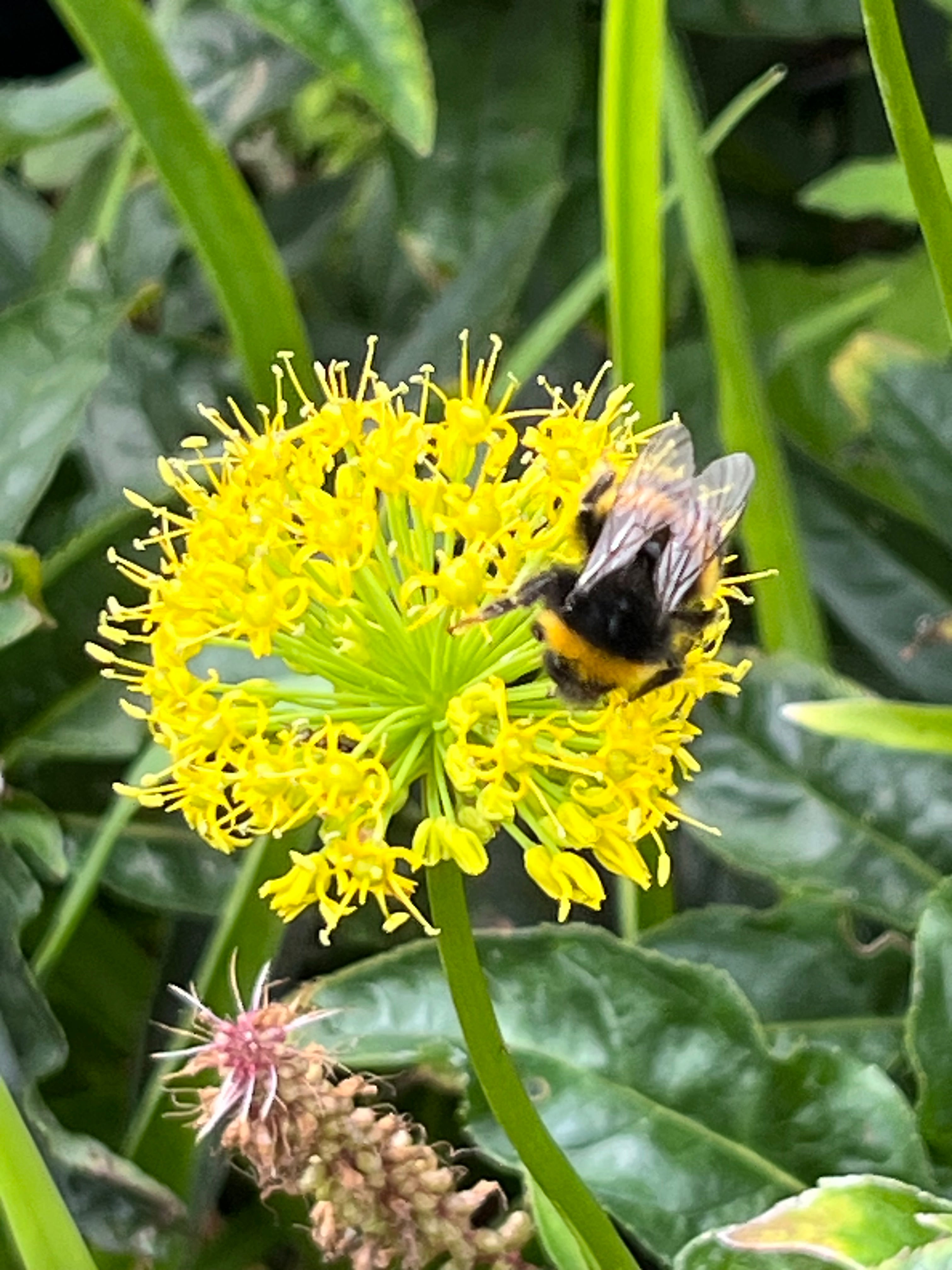
A choice, high-altitude form of Hooker’s Onion, distinguished from the typical variety by its greenish-yellow to bright yellow flowers rather than white. It forms attractive clumps of broad, strap-like, mid-green leaves, with stout flowering stems carrying rounded to hemispherical heads of relatively small but remarkably vivid yellow flowers. Rather more unusual than the standard white-flowered A. hookeri, and consequently rather more interesting to those of us who like our alliums to misbehave colour-wise.
Native to south-western Sichuan and north-western Yunnan, China, where it grows at 2,800–4,200 m, particularly in mountain meadows, moist places and woodland margins. This is a genuinely high-altitude plant, accustomed to cool summers and considerable exposure.
Nomenclature: Described by Airy Shaw in 1931 as Allium hookeri var. muliense, the epithet muliense refers to Muli County in southern Sichuan, part of its natural range. Kew currently accepts the varietal name, but a significant development came in 2026, when a detailed morphological and phylogenomic study elevated the plant to species rank as Allium muliense. The new treatment places it within the Allium hookeri Alliance and recognises it as sufficiently distinct to warrant species status. For the moment, both names will inevitably be encountered in specialist horticulture.
There is good evidence that the distinction is more than merely floral colour: A. hookeri var. muliense has been recognised morphologically and cytologically for decades, with studies recording it as diploid, 2n = 22.
Collection: A particularly interesting cultivated accession is CLD 1205, collected in Yunnan, Lijiang, Yulong Shan, Xie Ren Ji Valley, above Mu Zhou Go, at 3,000 m. This wild-origin material was subsequently maintained at Gothenburg Botanic Garden.
Edible: Like A. hookeri generally, it is a useful perennial onion with edible leaves and bulbs, although this yellow-flowered variety is principally grown as an ornamental rarity. The foliage has the characteristic mild onion flavour of Hooker’s Onion and can be harvested sparingly while leaving sufficient growth to maintain a vigorous clump.
Height: 40–60 cm
Spread: 30–45 cm
Flowers: July–October
Hardiness: Fully hardy in Britain
Best grown in full sun or light shade in a fertile, moisture-retentive but well-drained soil. Despite its Himalayan-Chinese origins and high-altitude provenance, it is remarkably accommodating in cultivation. Give it good drainage and reasonable moisture during the growing season and it will gradually form a handsome colony.
A particularly valuable plant for the specialist perennial, edible or naturalistic garden, combining an excellent wild provenance with those wonderfully unusual yellow flowers. And now, thanks to the taxonomists, it has acquired a promotion too: formerly a variety, apparently now a species — the botanical equivalent of getting a new job title without having to move desks.
- Standard delivery: £9.99
- Free shipping on orders over £100
- Minimum order is £20
Read more: Shipping & Delivery